
Navigating the Digital Marketplace: How to Accept Online Payments Without a Website
Let’s be honest, the idea of starting an online business often conjures up images of complex websites, coding headaches, and expensive web designers. But what if I told you that you can absolutely start raking in online payments without ever needing to build a single webpage? Yep, you heard that right! The digital world has become incredibly flexible, and there are more ways than ever to get paid online without the commitment of a full-blown website. So, if you’ve been holding back from launching your dream venture because of website worries, it’s time to unburden yourself and discover how simple it can be.
Why You Don’t Need a Website to Sell Online Anymore
Gone are the days when a website was the undisputed king of online commerce. While a website is fantastic for many businesses, it’s no longer the sole gatekeeper to the digital marketplace. Think about it: how many times have you bought something directly through an Instagram post or a Facebook ad? The lines are blurring, and convenience for the customer is paramount. This shift has opened up a world of possibilities for entrepreneurs who want to start selling without the initial hurdle of website creation.
Breaking Down the Myths: The Changing Landscape of E-commerce
For a long time, the narrative was simple: want to sell online? Build a website. But that’s a bit like saying you need a fancy storefront to sell artisanal bread. While it helps, you could also set up a stall at a farmers’ market or take custom orders through word-of-mouth. The e-commerce landscape has evolved. Platforms are now integrated, social media is a storefront, and even simple payment links can do the heavy lifting. We’ve moved from a “website or bust” mentality to a much more accessible, multi-channel approach.
Essential Tools for Seamless Online Transactions
So, if not a website, then what? The magic lies in specialized tools designed to handle payments and sales without a central online hub. These are your virtual cashiers, your digital sales assistants, and your secure transaction processors. Let’s break down the key players.
Payment Gateways: Your Virtual Cashiers
Think of payment gateways as the sophisticated technology that securely authorizes and processes credit card and other digital payments. They act as the bridge between your customer, your bank, and the payment processor. They’re the unsung heroes making sure your hard-earned money lands in your account without a hitch.
Understanding How Payment Gateways Work
When a customer enters their card details, the payment gateway encrypts this sensitive information and sends it to the payment processor. The processor then communicates with the customer’s bank to get approval for the transaction. Once approved, the gateway receives the confirmation and sends it back to the customer, and your account is credited. It’s a rapid, secure dance of data happening in mere seconds.
Top Payment Gateway Options for Website-less Businesses
You don’t need a website to integrate with most popular payment gateways. Services like Stripe, PayPal, Square, and Braintree offer solutions that can be used to generate payment links, accept payments via email invoices, or even integrate with social media selling tools. They are designed to be flexible, allowing you to plug them into various sales channels.
Alternative Platforms: Social Media & Marketplaces
Why build your own digital shop when you can set up in bustling online marketplaces or leverage the immense reach of social media? These platforms have already done the heavy lifting of attracting an audience, and they often have built-in tools for transactions.
Leveraging Social Commerce Features
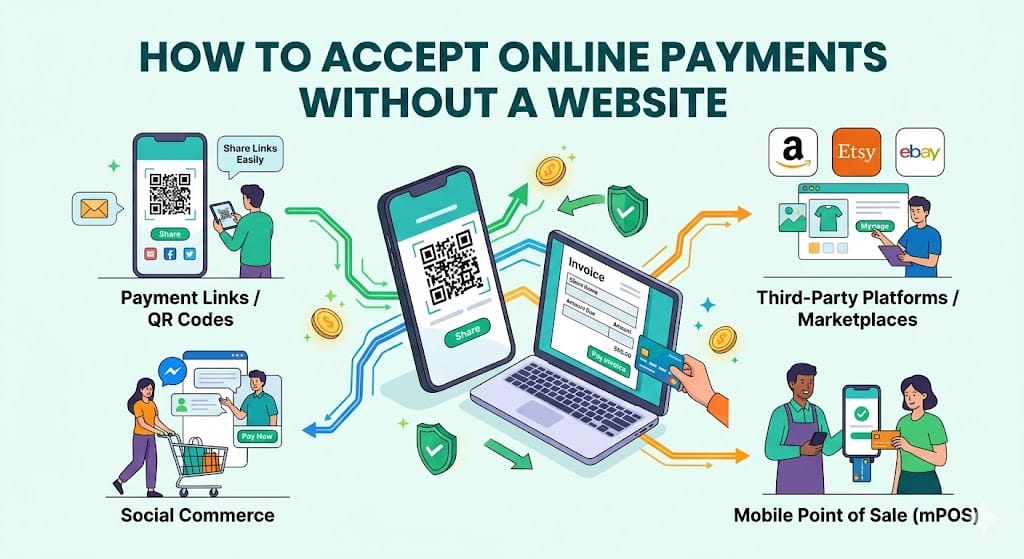
Platforms like Instagram and Facebook have been pushing “social commerce” hard. You can set up shops directly on your Facebook page or Instagram profile. This allows users to browse products and complete purchases without ever leaving the app. Think of it as having a pop-up shop on the busiest street in town!
Selling Through Online Marketplaces
Etsy, eBay, Amazon Handmade, and even niche marketplaces for specific crafts or goods are fantastic options. You list your products, and the marketplace handles the payment processing, customer service infrastructure, and often, the discovery of your brand by potential buyers. It’s like renting a stall in a well-established, high-traffic market.
Methods to Accept Payments Without a Website: A Deep Dive
Now that we’ve covered the foundational tools, let’s get into the nitty-gritty of how you can actually start collecting payments. These methods are surprisingly straightforward and incredibly effective.
Payment Links: The Simplest Solution
This is, hands down, one of the easiest ways to get paid online. A payment link is essentially a direct URL that customers can click to pay you. You create it through your payment gateway provider, specify the amount and currency, and then share it.
How to Create and Share Payment Links
Most payment gateways (like Stripe, PayPal, Square) have a simple interface for generating payment links. You’ll log into your account, find the “create payment link” option, enter the details, and then share the generated link via email, text message, social media direct message, or even in a QR code. Imagine sending a digital invoice that’s just a click away from being paid!
Invoicing Software: Professional and Trackable
If you’re dealing with custom orders, services, or B2B sales, invoicing software is your best friend. It allows you to create professional-looking invoices that you can send directly to your customers. These invoices typically include a secure link for payment.
Benefits of Using Invoicing Tools
Beyond just collecting payments, invoicing software helps you track your sales, manage outstanding payments, and maintain organized financial records. It adds a layer of professionalism that can build trust and encourage repeat business. Think of it as having a digital ledger that also conveniently handles the money collection.
Point-of-Sale (POS) Systems for Mobile Transactions
Even if you don’t have a brick-and-mortar store, a mobile POS system can be a game-changer. Services like Square or PayPal offer card readers that connect to your smartphone or tablet. This allows you to accept card payments on the go, whether you’re at a craft fair, a client’s location, or even just meeting a customer for a quick exchange.
Going Mobile with Your Business
This is perfect for service providers, pop-up shops, or anyone who interacts with customers in person but wants to accept digital payments. It bridges the gap between the physical and digital, offering flexibility and convenience for both you and your clients.
Security and Trust: Building Confidence with Your Customers
Accepting payments online, especially without a website, might raise questions about security. But rest assured, the tools available are designed with robust security measures. The key is to use reputable providers and communicate clearly with your customers.
Ensuring Secure Transactions
Reputable payment gateways and platforms use industry-standard encryption (like SSL) to protect sensitive customer data. They also comply with PCI DSS (Payment Card Industry Data Security Standard) regulations. When you use these established services, you’re leveraging their security expertise, which is often more robust than what a small business could implement on its own.
Building Trust Without a Formal Website
Trust is built on transparency and reliability. When you don’t have a website, focus on:
- Clear Communication: Be upfront about your pricing, payment methods, and delivery or service timelines.
- Professional Invoices/Links: Use well-designed invoices and ensure your payment links are clearly branded.
- Customer Reviews: Encourage satisfied customers to leave reviews on social media or relevant platforms.
- Prompt Responses: Be quick to answer customer inquiries.
- Secure Payment Providers: Highlight that you use trusted payment processors like PayPal or Stripe.
Your reputation and customer service become your digital storefront.
Which Method is Right for You? Factors to Consider
Choosing the best approach depends entirely on your unique business situation. There’s no one-size-fits-all answer, so let’s think about what matters most to you.
Your Business Model and Customer Base
Are you selling handmade crafts to individuals? You might thrive on Etsy or Instagram. Are you a freelance consultant? Payment links and invoicing software will be perfect. Are you a mobile dog groomer? A mobile POS system is essential. Understanding who you’re selling to and what you’re selling is the first step.
Transaction Volume and Value
If you anticipate a high volume of small transactions, a platform with low per-transaction fees might be best. For high-value transactions, you might prioritize features like enhanced fraud protection or detailed reporting.
Technical Savvy and Time Commitment
Some methods, like payment links, require very little technical skill and minimal time. Others, like setting up a social media shop, might take a bit more effort initially but can offer broader reach. Assess your comfort level with technology and how much time you can dedicate to setup and management.
The Future is Flexible: Embracing Website-Less Selling
The ability to accept online payments without a website is more than just a workaround; it’s a testament to the evolving, agile nature of business. It democratizes entrepreneurship, allowing more people to turn their passions into profitable ventures without the traditional barriers to entry. This flexibility is key to thriving in today’s dynamic market.
Opportunities for Growth and Scalability
While starting without a website is feasible, don’t think it limits your growth. Many successful businesses begin this way and then scale up, perhaps adding a website later as their needs evolve. The tools you use now can often integrate with a website down the line, making the transition smooth. Your initial setup can be the foundation for much bigger things!
Conclusion: Your Path to Online Payment Success
The digital world is brimming with opportunities, and the lack of a website should never be a roadblock to accepting online payments. With the right tools—be it payment links, invoicing software, social commerce, or mobile POS systems—you can establish a seamless, secure, and professional way to get paid. Focus on providing excellent products or services, building trust with your customers, and leveraging these accessible technologies. Your online payment journey starts now, and it’s simpler than you might think!
Frequently Asked Questions (FAQs)
- Is it safe to accept payments without a website?
Absolutely! As long as you use reputable payment processors (like Stripe, PayPal, Square) that employ strong encryption and security measures, it is very safe. These services are built to protect both you and your customers’ financial information. - What’s the difference between a payment gateway and a payment processor?
A payment gateway is the technology that acts as the front-end, encrypting data and communicating between the customer, the merchant, and the processor. A payment processor is the entity that handles the actual transfer of funds between the banks. Often, services like Stripe or PayPal act as both. - Can I accept recurring payments (subscriptions) without a website?
Yes, many payment gateways and invoicing tools allow you to set up recurring payments or subscriptions. You can usually configure this directly within your account settings on these platforms. - How do I make sure customers trust me if I don’t have a website?
Build trust through clear communication, professional invoices, excellent customer service, prompt responses to inquiries, and by showcasing any positive customer reviews or testimonials you receive on social media or other platforms. Using well-known payment processors also adds a layer of credibility. - Are there any transaction fees involved when using these methods?
Yes, virtually all payment processing methods involve transaction fees. These vary depending on the provider, the type of transaction, and your business volume. It’s important to compare the fee structures of different services to find the most cost-effective option for your business.