
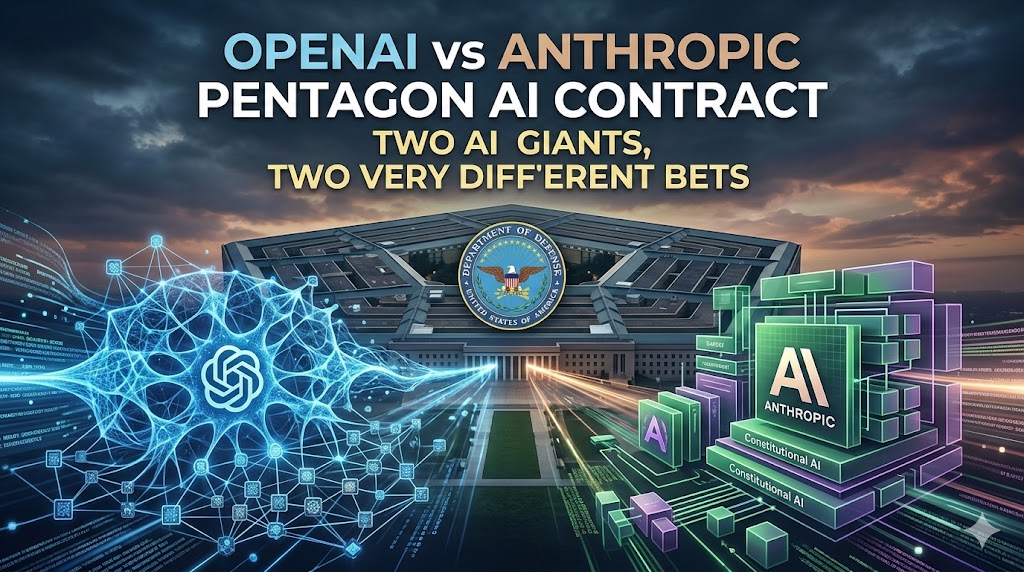
OpenAI vs. Anthropic Pentagon AI Contract: Two AI Giants, Two Very Different Bets
Introduction: The Dawn of AI in National Security
Hey there, ever felt like the future is arriving at warp speed? Well, buckle up, because the world of national security is now firmly in the AI spotlight. We’re talking about the kind of advanced artificial intelligence that could redefine how nations protect themselves. Recently, two of the biggest names in the AI game, OpenAI and Anthropic, have landed significant contracts with the U.S. Department of Defense (DoD). It’s not just another tech deal; it’s a glimpse into how these powerful AI models might be integrated into critical defense systems. But here’s the kicker: these two tech titans are approaching this with vastly different philosophies, making their respective Pentagon deals a fascinating study in contrasts. It’s like watching two chess grandmasters make entirely separate, yet equally strategic, opening moves.
The Stakes Are High: Why the Pentagon Needs Advanced AI
Let’s be real, the battlefield is getting more complex by the second. From sophisticated cyber threats to the need for faster decision-making in high-pressure situations, the Pentagon is looking for an edge. Advanced AI promises to deliver just that. Think about it: AI could help analyze vast amounts of intelligence data in mere moments, identify potential threats with uncanny accuracy, streamline logistics, and even assist in strategic planning. In a world where information overload is a constant challenge, AI offers a way to cut through the noise and pinpoint critical insights. It’s about augmenting human capabilities, not replacing them, to ensure our defense forces are equipped with the most effective tools available.
The Players: Unveiling OpenAI and Anthropic
Before we dive into the nitty-gritty of their contracts, let’s get acquainted with our main characters. OpenAI, the creator of the incredibly popular ChatGPT, has become a household name. They’ve been at the forefront of developing powerful, general-purpose AI models with a mission to ensure artificial general intelligence (AGI) benefits all of humanity. Their trajectory has been marked by rapid innovation and a push towards making AI more accessible and capable.
On the other side, we have Anthropic. Founded by former members of OpenAI, Anthropic has carved out its niche by placing a strong emphasis on AI safety and ethics from day one. Their flagship model, Claude, is designed with built-in guardrails and a focus on being helpful, harmless, and honest. They’re not just building powerful AI; they’re building AI that they believe can be trusted.
OpenAI’s Approach: A Strategic Partnership with the DoD
So, what’s OpenAI’s game plan with the Pentagon? It appears to be a more direct route, leveraging their advanced AI capabilities for a wide range of defense applications. While the specifics of their DoD contract remain under wraps – as these things often are in the world of national security – the general understanding is that OpenAI is looking to deploy its models to address various defense-related challenges.
The Deal Details: What We Know (and Don’t Know)
It’s a bit like trying to peek behind a magician’s curtain. The exact financial figures and the precise scope of work for OpenAI’s contract are not publicly disclosed. However, industry observers and reports suggest that OpenAI is working with the DoD to explore how its AI technologies, likely including variations of its large language models, can be integrated into defense operations. This could range from improving data analysis for intelligence agencies to developing tools for operational planning and logistics.
Focus on Commercial Applications and Broader AI Development
One angle to consider is that OpenAI’s involvement might be less about developing entirely new military-specific AI and more about adapting and applying their existing, cutting-edge commercial models. Think of it as providing the DoD with access to a highly sophisticated toolkit that can be customized for defense needs. This aligns with OpenAI’s broader mission of developing AGI and making it widely available, with national security being one significant area of application.
Potential for Dual-Use Technology: A Delicate Balance
This is where things get interesting. Many AI technologies developed for commercial use can also have “dual-use” capabilities, meaning they can be applied for both civilian and military purposes. OpenAI’s contract likely treads this line. The challenge, and perhaps the strategic bet, is in harnessing the power of these AI systems for defense without creating unintended risks. It’s a tightrope walk, balancing innovation with security.
OpenAI’s Vision: Scaling AI for National Security Needs
OpenAI’s strategy seems to be about scaling. They’ve already demonstrated the immense power of their models in the civilian sector. By partnering with the DoD, they’re essentially expanding their reach into a domain with unique and demanding requirements. Their bet is that their rapidly evolving AI technology can be a force multiplier for national security, enhancing capabilities across the board. It’s a forward-looking approach, anticipating the future needs of defense and positioning themselves as a key provider.
Anthropic’s Path: A Commitment to AI Safety and Ethics
Anthropic, on the other hand, seems to be taking a more cautious, safety-first approach to its Pentagon dealings. Their entire corporate identity is built around developing AI that is not only powerful but also inherently safe and aligned with human values. This ethos is deeply embedded in their AI models and their business strategy, and it’s clearly a significant factor in their DoD contract.
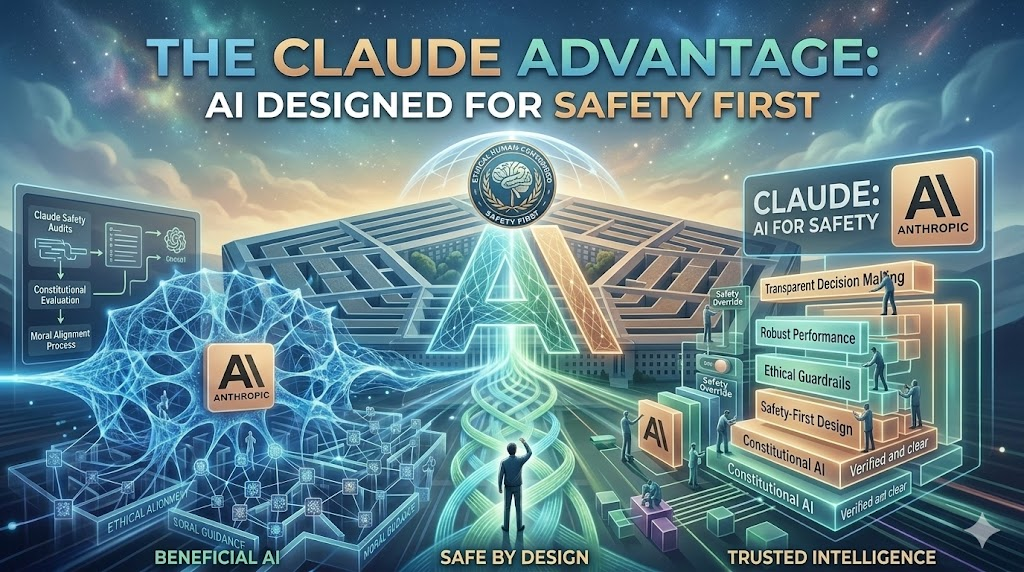
The Claude Advantage: AI Designed for Safety First
Anthropic’s flagship model, Claude, is engineered with safety as a core principle. This isn’t just a marketing slogan; it’s a fundamental aspect of its architecture. They’ve invested heavily in research and development to ensure Claude behaves in ways that are helpful, honest, and harmless. This focus on safety is a major selling point for any organization, but especially for entities like the DoD, where unintended consequences can be particularly severe.
Constitutional AI: Reinforcing Ethical Boundaries
One of Anthropic’s most innovative contributions to AI safety is its concept of “Constitutional AI.” Imagine an AI that doesn’t just follow instructions but also adheres to a set of ethical principles, like a constitution. That’s the idea. Anthropic trains its models by providing them with a “constitution” – a set of rules and guidelines derived from sources like the UN Declaration of Human Rights. The AI then uses these principles to evaluate and refine its own responses, essentially learning to be ethical and safe on its own. This is a powerful way to build AI that is more aligned with human values.
Mitigating Risks: A Proactive Stance on AI Governance
Anthropic’s approach is inherently about risk mitigation. They seem to be betting that by prioritizing safety and ethical development from the outset, they can offer AI solutions that the DoD can deploy with greater confidence. This proactive stance on AI governance and safety is what sets them apart and likely makes them an attractive partner for defense applications where trust and reliability are paramount.
Anthropic’s Contract: Aligning with Pentagon’s Ethical Imperatives
Anthropic’s contract with the DoD is likely structured to leverage their safety-focused AI. While specifics are scarce, it’s reasonable to assume they are providing Claude or a specialized version of it for applications where safety, reliability, and ethical considerations are non-negotiable. This could involve tasks where AI needs to make critical judgments or operate in sensitive environments, requiring a high degree of trustworthiness. Their bet is on the long-term value of building and deploying AI responsibly.
Key Differences: Contrasting Strategies and Philosophies
The divergence between OpenAI and Anthropic’s Pentagon contracts is striking and reveals much about their underlying strategies and philosophies. It’s not just about who has the “better” AI; it’s about fundamentally different visions for how AI should be developed and deployed, especially in such a high-stakes domain.
Risk Tolerance: Commercial Scalability vs. Safety Assurance
OpenAI appears to have a higher tolerance for the inherent risks associated with rapidly scaling advanced AI. Their strategy leans towards broad application and development, where national security is one of many areas benefiting from their powerful, general-purpose models. Their bet is on the sheer capability and adaptability of their AI. Anthropic, conversely, prioritizes risk aversion. Their bet is on the robustness of their safety protocols and the trustworthiness of their AI, even if it means a potentially more constrained initial deployment or a slower scaling curve.
Transparency and Openness: Divergent Paths
While both companies operate with a degree of commercial confidentiality, their public stances and development philosophies suggest different approaches to transparency. OpenAI, while not fully open-source for its most advanced models, has a history of pushing the boundaries of AI capabilities and making them accessible. Anthropic, by contrast, has made AI safety and transparency about its safety mechanisms a cornerstone of its brand. Their “Constitutional AI” is a prime example of their commitment to explaining how their AI is designed to be safe. This difference might influence how the DoD perceives and integrates their respective technologies.
Long-Term Goals: Broad AI Advancement vs. Responsible AI Deployment
At their core, OpenAI’s mission revolves around achieving AGI and ensuring it benefits humanity broadly. Their DoD contract can be seen as a significant step in that direction, testing and refining their AI in a demanding environment. Anthropic, while also aiming for advanced AI, places a paramount emphasis on responsible deployment and ensuring that AI development doesn’t outpace our ability to control and understand it. Their DoD contract is a testament to their belief that safety-first AI can and should be applied to critical national security challenges.
Implications for National Security and the AI Landscape
These two distinct approaches to AI contracting with the Pentagon have far-reaching implications, not just for the military but for the entire AI ecosystem. It’s like planting two different seeds in the same fertile ground – what will grow?
The Future of AI in Warfare: A New Era of Decision-Making
The integration of advanced AI into defense systems heralds a new era. With OpenAI’s powerful, adaptable models, we might see AI assisting in complex tactical decisions, accelerating intelligence analysis, and optimizing resource allocation at an unprecedented speed. Anthropic’s safety-focused AI, on the other hand, could be crucial for applications demanding high reliability and ethical judgment, such as autonomous systems operating in complex environments or AI assistants providing decision support in critical command centers. The challenge will be in finding the right balance and ensuring human oversight remains paramount.
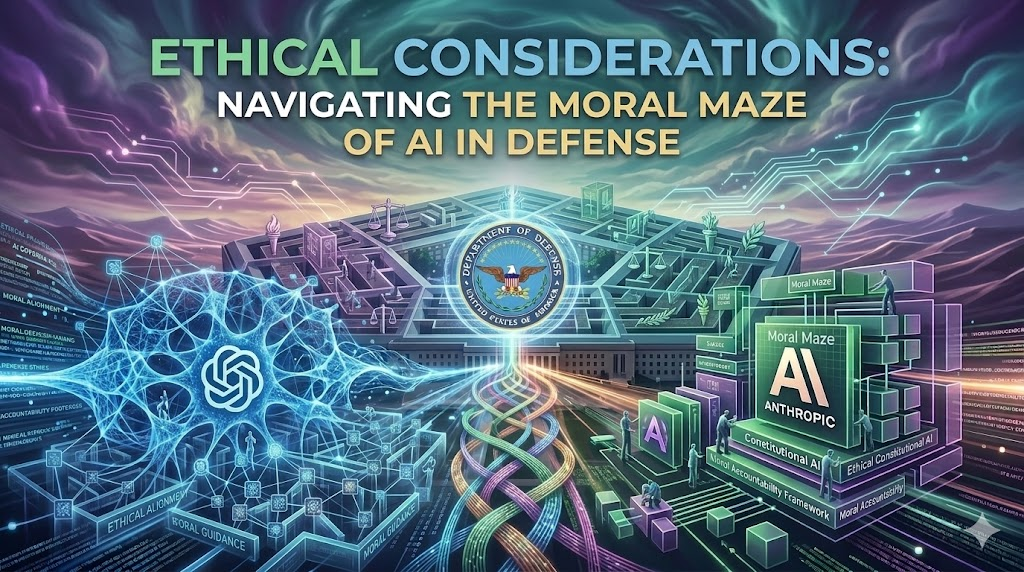
Ethical Considerations: Navigating the Moral Maze of AI in Defense
This is perhaps the most critical aspect. As AI takes on more roles in national security, the ethical questions become increasingly profound. Who is accountable when an AI makes a mistake? How do we ensure AI systems don’t perpetuate biases? OpenAI’s broad approach might require robust human-in-the-loop systems to manage potential ethical gray areas. Anthropic’s dedicated focus on safety and its “Constitutional AI” aim to pre-emptively address some of these concerns, but the ethical landscape of AI in warfare is still largely uncharted territory.
The Broader AI Ecosystem: Competition and Collaboration
The involvement of these AI giants in defense contracts can have a ripple effect across the entire tech industry. It can spur further innovation, as companies race to develop more capable and safer AI. It also raises questions about competition versus collaboration. Will this lead to a more fragmented AI landscape, or will it encourage a shared understanding of best practices, particularly concerning safety and ethical development? The choices made today by OpenAI and Anthropic, and the Pentagon’s response to them, will shape the future of AI for years to come.
Conclusion: A Tale of Two Bets on the Future of AI
The Pentagon AI contracts awarded to OpenAI and Anthropic are more than just business deals; they are powerful indicators of divergent paths in the AI revolution. OpenAI is making a bold bet on the rapid advancement and broad application of its cutting-edge AI, aiming to leverage its capabilities for national security. Anthropic, with its unwavering commitment to safety and ethics, is betting that a more cautious, principled approach will ultimately lead to more trustworthy and beneficial AI deployments in defense. As these two titans navigate the complex landscape of national security AI, their contrasting strategies offer a compelling preview of the future of artificial intelligence and the critical choices we face in harnessing its immense power responsibly.
Frequently Asked Questions (FAQs)
- What is the primary goal of these Pentagon AI contracts?
The primary goal is to leverage advanced Artificial Intelligence technologies to enhance national security capabilities. This includes improving intelligence analysis, decision-making processes, operational efficiency, and overall defense readiness in an increasingly complex global landscape. - How does OpenAI’s approach differ from Anthropic’s in terms of their Pentagon contracts?
OpenAI appears to be focused on deploying its general-purpose, highly capable AI models for a broad range of defense applications, emphasizing scalability and rapid development. Anthropic, on the other hand, prioritizes AI safety and ethical considerations, using its “Constitutional AI” framework to ensure its models are helpful, harmless, and honest, likely for more sensitive or critical applications. - What is “Constitutional AI” and why is it important for Anthropic?
“Constitutional AI” is Anthropic’s method of training AI models to adhere to a set of ethical principles, much like a constitution. It’s crucial for Anthropic because it’s their core strategy for building AI that is inherently safer and more aligned with human values, making it more trustworthy for deployment in critical sectors like national security. - Are there concerns about the potential misuse of AI developed under these contracts?
Yes, there are significant concerns regarding the potential misuse of AI in national security. These include issues related to autonomous weapons, algorithmic bias, data privacy, and the potential for AI to escalate conflicts. Both OpenAI and Anthropic, through their different approaches, are attempting to address these concerns, but the inherent risks of AI in warfare remain a subject of intense debate. - Will these contracts impact the development of AI for civilian use?
It’s highly likely. Technologies and best practices developed for these high-stakes defense contracts can often trickle down to civilian applications. For instance, advancements in AI safety and reliability spurred by Anthropic’s work could lead to more robust AI tools for healthcare, finance, or education. Conversely, OpenAI’s push for broader AI capabilities might accelerate the development of more powerful general AI tools applicable across many civilian sectors.
Pingback: 14.ai Is the World’s First AI-Native Customer Service Agency — And It Replaces Your Entire Support Team
Pingback: ChatGPT Ecosystem Dominance: How 900M Weekly Users Made It the Internet’s First AI Super-App