
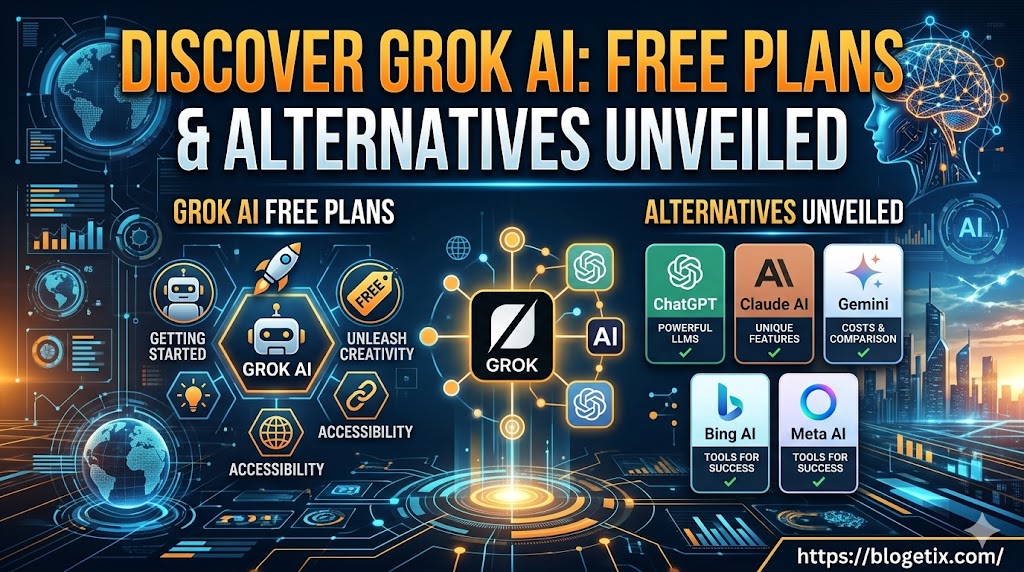
Grok AI Exploring Free Plans and the Exciting World of Alternatives
Understanding Grok AI: What is it and Why the Buzz?
So, you’ve heard the whispers, the exciting chatter about Grok AI, right? It’s the new kid on the block, or at least, it feels that way in the rapidly evolving universe of artificial intelligence. But what exactly is Grok AI? Imagine an AI assistant that’s not just smart, but also a little bit cheeky, designed to have a sense of humor and a knack for tackling complex questions with a dash of personality. It’s built by X AI, Elon Musk’s AI venture, and it’s been making waves for its unique approach. The buzz is real because it promises something a little different – an AI that can not only process information but also engage in more nuanced, even witty, conversations, all while having access to a wealth of real-time data.
The Current State of Grok AI: Free Access and Limitations
Now, let’s cut to the chase: can you get your hands on Grok AI for free? This is the million-dollar question, isn’t it? As of its initial rollout and ongoing development, direct, completely free, open-ended access to Grok AI in its full capacity isn’t exactly the standard offering. Think of it like a highly anticipated movie premiere; you might get a sneak peek or a limited screening, but the full experience often comes with a ticket. xAI has positioned Grok primarily as a premium feature, accessible through their subscription services. This means that while the concept of Grok is out there and generating excitement, actually using its most advanced features often requires a commitment.
Is There a Truly “Free” Grok AI? Decoding the Offering
So, when people talk about “Grok AI free plans,” what are they really referring to? It’s a bit of a nuanced situation. Sometimes, “free” in the tech world can mean a trial period, limited functionality within a broader platform, or perhaps access through an existing service that offers it as a perk. For Grok, the most prominent way to access it has been through the X Premium+ subscription (formerly Twitter Blue). This isn’t entirely “free” in the sense of costing zero dollars, but it integrates Grok into a platform many already use, making the AI’s availability feel more accessible to a specific user base. There might be limited instances or promotional periods where certain functionalities are showcased, but a standalone, perpetually free version of Grok with all its capabilities isn’t what’s currently on the table. It’s more about experiencing Grok as part of a premium package.
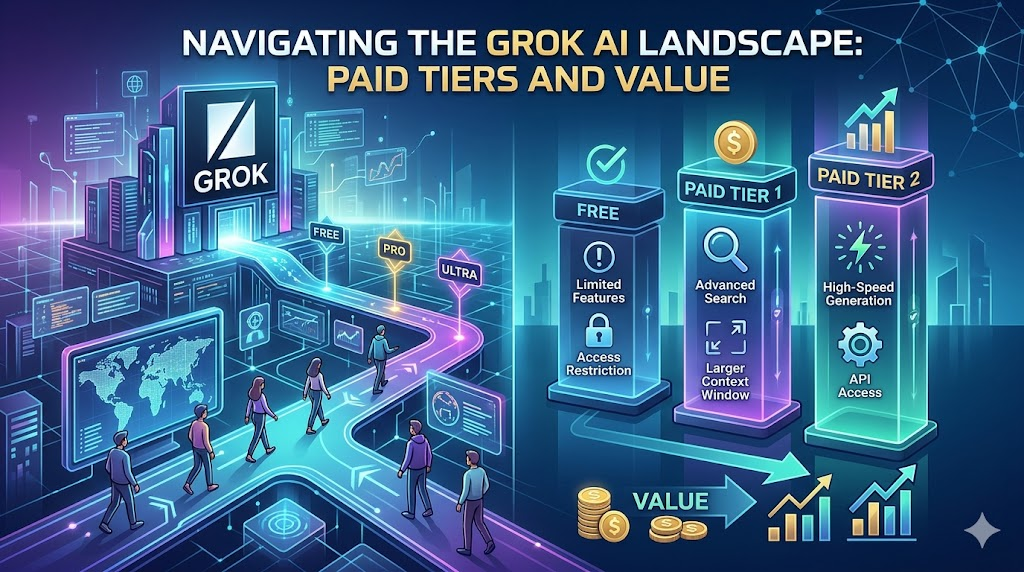
Navigating the Grok AI Landscape Paid Tiers and Value
Understanding the “free” aspect also means appreciating what you get when you do opt for a paid tier. When you subscribe to access Grok, you’re not just paying for an AI; you’re investing in a suite of advanced capabilities designed to set it apart from the crowd. It’s about unlocking the full potential that the developers have poured into this model.
Grok’s Premium Features: What You Get for Your Money
So, what exactly makes Grok’s premium offering worth considering? It’s a combination of powerful functionalities that aim to provide a more comprehensive and engaging AI experience. This isn’t just about getting answers; it’s about getting them in a way that feels more integrated and insightful.
Real-time Information Access: The X Factor
One of the most significant differentiators for Grok is its purported ability to access and process real-time information directly from the X platform. Imagine an AI that can tap into the pulse of current events, trending discussions, and breaking news as they happen. This is a game-changer for tasks requiring up-to-the-minute data. While many AI models are trained on vast datasets, they often have a knowledge cut-off date. Grok’s connection to the live stream of information on X gives it an edge in providing contextually relevant and current responses. It’s like having a researcher who can constantly monitor the world and feed you the latest updates, rather than someone relying on yesterday’s newspaper.
Advanced Reasoning and Creative Capabilities
Beyond just retrieving information, Grok is designed with advanced reasoning capabilities. This means it can go beyond simple question-and-answer formats. It can help you brainstorm ideas, analyze complex scenarios, and even engage in creative writing. The aim is to foster a more dynamic interaction, where the AI can understand nuances, follow more intricate lines of thought, and assist in tasks that require a deeper level of cognitive processing. Think of it as moving from a basic calculator to a sophisticated analytical tool that can also help you draft that novel or screenplay.
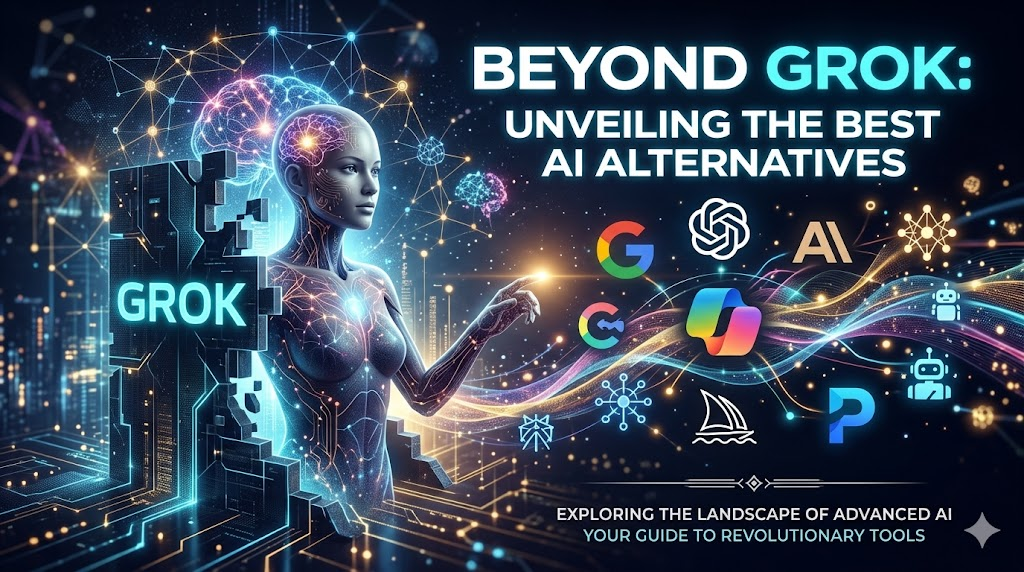
Beyond Grok Unveiling the Best AI Alternatives
While Grok is certainly generating a lot of excitement, the AI landscape is vast and brimming with incredible tools. If you’re looking for powerful AI assistance without necessarily jumping into a specific subscription, or if you want to compare and contrast, there are some stellar alternatives out there. Many of these offer robust free tiers that can be incredibly useful for a wide range of tasks. It’s a bit like exploring different cafes; each has its own vibe, its own specialty coffee, and its own loyal customers.
Top Contenders: Feature-Rich Free AI Tools
Let’s dive into some of the most popular and capable AI models that offer significant value, often with generous free access. These are the workhorses of the AI world, trusted by millions for their versatility and performance.
ChatGPT (OpenAI): The Reigning Champion
It’s almost impossible to talk about AI without mentioning ChatGPT. Developed by OpenAI, ChatGPT has become synonymous with advanced conversational AI. Its free version, typically based on GPT-3.5, is remarkably powerful. It can generate text, translate languages, write different kinds of creative content, and answer your questions in an informative way. For many, it’s the go-to for everything from drafting emails to understanding complex topics. While the paid versions offer access to newer models like GPT-4 with even greater capabilities, the free tier is a fantastic starting point and remains highly competitive.
Google Bard: Seamless Integration and Broad Knowledge
Google’s answer to conversational AI, Bard, is another major player. What sets Bard apart is its deep integration with Google’s ecosystem and its ability to pull information from the web in real-time, much like Grok aims to do. This means Bard can often provide very current and relevant answers. It’s great for research, summarizing web pages, and brainstorming. Bard’s conversational abilities are continuously improving, making it a strong contender for everyday AI assistance. Its user-friendly interface and the sheer breadth of Google’s knowledge base make it an incredibly accessible and powerful free tool.
Microsoft Copilot: Your Everyday AI Assistant
Microsoft has integrated AI capabilities across its product suite with Copilot. Whether you’re using Bing search, Edge browser, or Microsoft 365 applications, Copilot aims to be your helpful assistant. It leverages advanced models, including some developed in partnership with OpenAI, to provide information, generate content, and streamline tasks. The free version, accessible through Bing, offers a robust experience, allowing users to ask questions, get summaries, and generate creative text formats. It’s like having a helpful colleague embedded in your daily workflow, ready to lend a hand.
Niche AI Tools: Tailored Solutions for Specific Needs
Beyond the general-purpose conversational AIs, there’s a whole universe of specialized AI tools that excel in very specific areas. If your needs are more focused, these can be incredibly efficient and effective.
Midjourney/DALL-E 2: For the Creatively Inclined
Struggling to visualize your ideas? For artists, designers, marketers, or anyone with a creative itch, AI image generators like Midjourney and DALL-E 2 (from OpenAI) are revolutionary. While they often have paid tiers for extensive use, many offer limited free trials or credits to get you started. You can describe a scene or concept, and these AIs will conjure up stunning, unique images. They’re perfect for generating blog post visuals, concept art, or simply exploring your imagination in a new way.
Jasper/Copy.ai: For Content Creation Powerhouses
For businesses, bloggers, marketers, and writers, AI writing assistants like Jasper and Copy.ai are invaluable. These platforms are specifically designed to help you generate marketing copy, blog posts, social media updates, and much more. They provide templates and frameworks to ensure your content is not only creative but also optimized for conversion and engagement. Many offer free trials or limited free plans, allowing you to experience their power firsthand before committing to a subscription.
Making the Right Choice: Factors to Consider
With so many amazing AI tools available, both free and paid, how do you pick the one that’s right for you? It’s not a one-size-fits-all scenario. Think of it like choosing a tool from a well-stocked toolbox – you wouldn’t use a hammer to screw in a bolt, right? The best AI for your needs depends entirely on what you want to accomplish.
Your Needs: What Do You Want to Achieve with AI?
The first and most crucial step is to define your goals. Are you a student looking for help with research and essay structuring? A writer aiming to overcome writer’s block and generate creative content? A marketer trying to craft compelling ad copy? Or perhaps you’re just curious and want an AI to chat with or explain complex topics? Your specific use case will dramatically narrow down the field. For instance, if your primary need is real-time news summaries, an AI with web-browsing capabilities like Bard or Copilot might be ideal. If you’re focused on creative writing, ChatGPT’s free tier might be sufficient.
Budget: Free vs. Paid – What’s Your Comfort Zone?
Let’s talk about the elephant in the room: cost. Many of us are naturally drawn to “free” options, and for good reason. Free AI tools, as we’ve seen, are incredibly powerful and can handle a vast array of tasks. However, if you find yourself consistently hitting limitations or if your work demands the absolute latest features, highest speeds, or most advanced capabilities, then exploring paid tiers becomes a worthwhile consideration. Grok’s premium access, for example, is positioned for those who want its specific real-time data and unique personality. Evaluate how much value you’re getting from a free tool and if the investment in a paid version would significantly enhance your productivity or output.
Features: Which AI Excels at Your Specific Tasks?
Each AI model has its strengths and weaknesses, or rather, its areas of particular brilliance. While ChatGPT is a master of general conversation and creative text, Bard shines with its web integration. Grok aims for real-time, witty interactions. If you need to generate images, you’ll look to Midjourney or DALL-E 2. If your focus is solely on marketing copy, Jasper or Copy.ai might be your go-to. Don’t be afraid to try out the free versions of several different AIs. Experiment with your typical tasks and see which one produces results that best align with your expectations and quality standards. It’s about finding the AI that “clicks” with your workflow.
The Future of AI: What’s Next for Grok and Its Competitors?
The world of AI is like a super-fast train, constantly accelerating. For Grok, the journey is just beginning. We can anticipate continuous improvements in its reasoning, its real-time data integration, and perhaps even new ways to access its unique personality. Will it remain tied to subscription models, or will we see more flexible access points emerge? It’s hard to say definitively, but the trend across the AI industry is towards more sophisticated capabilities, better personalization, and wider integration into our daily lives. We’re likely to see existing players like ChatGPT and Bard continue to evolve, pushing the boundaries of what’s possible. Expect more specialized AIs to pop up, catering to ever-more-niche demands. The competition is fierce, and that’s fantastic news for us users, as it drives innovation and offers us more choices than ever before.
Conclusion: Embracing the AI Revolution Responsibly
So, there you have it – a deep dive into the world of Grok AI, its free accessibility (or lack thereof), and the incredible array of alternatives available. While the allure of a truly “free” Grok AI plan might be strong, the reality is that cutting-edge AI often comes with a price tag, or at least, integration into a premium service. However, this doesn’t mean you’re left out in the cold! The free tiers offered by giants like OpenAI, Google, and Microsoft are immensely powerful and can serve a vast majority of users’ needs. The key is to understand your own requirements, explore the options, and choose the AI that best fits your workflow, budget, and aspirations. As AI continues to weave itself into the fabric of our lives, approaching it with curiosity, a critical eye, and a commitment to responsible use will ensure we harness its power for the greatest good.
Frequently Asked Questions (FAQs)
Q1: Will Grok AI ever be completely free to use?
While it’s impossible to predict the future with certainty, xAI has positioned Grok primarily as a premium offering, accessible through subscriptions like X Premium+. It’s less likely that a fully featured, unrestricted version will become entirely free, though promotional periods or limited-access versions might appear sporadically.
Q2: What are the biggest advantages of using a paid AI model?
Paid AI models often offer access to the latest and most advanced algorithms (like GPT-4 for ChatGPT Plus), faster response times, higher usage limits, priority access during peak times, and features not available in free versions. For professionals and heavy users, these benefits can translate into significant gains in productivity and quality of output.
Q3: Can I use multiple AI alternatives for different tasks?
Absolutely! This is often the most effective strategy. You might use ChatGPT for creative writing, Bard for quick web research, and a specialized AI like Midjourney for image generation. Each tool has its strengths, and leveraging multiple platforms allows you to pick the best tool for each specific job.
Q4: How can I stay updated on new AI developments?
Follow reputable tech news outlets, AI research blogs (like OpenAI’s or Google AI’s), subscribe to newsletters from AI companies, and engage with AI communities on platforms like Reddit or X. Staying informed about new models, features, and ethical considerations is crucial.
Q5: Is free AI as good as paid AI for professional use?
For many professional tasks, free AI like ChatGPT (GPT-3.5) or Google Bard can be remarkably effective. However, if your work demands cutting-edge accuracy, complex reasoning, higher customization, or access to the very latest features that paid tiers offer, then a paid AI solution will likely provide superior results and efficiency.