
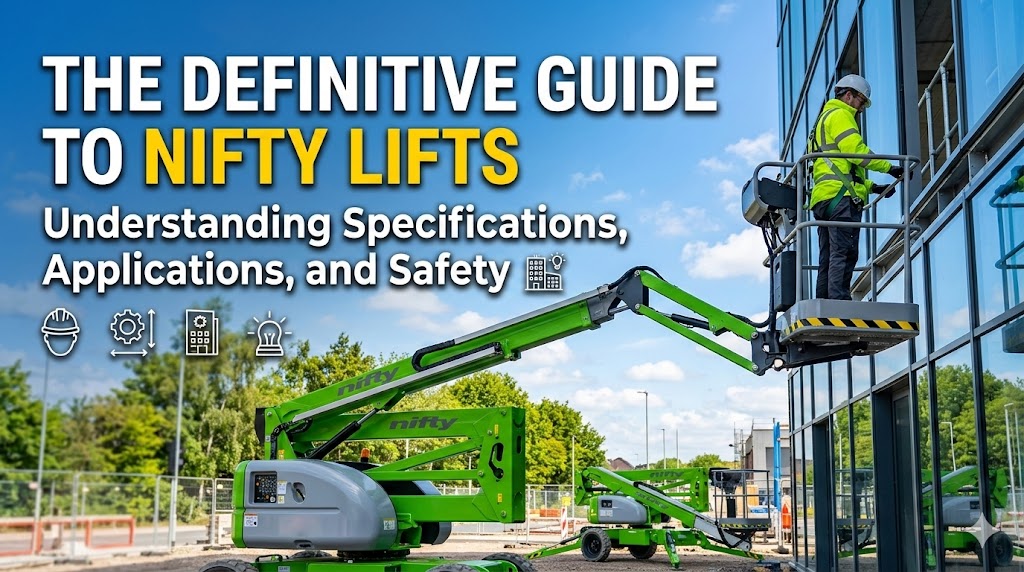
In the busy world of construction and maintenance, reaching high spots safely can make or break a job. Nifty lifts, compact mobile platforms from the trusted Nifty-Lift brand, fill that need perfectly. They sit between basic ladders and big machines, offering easy access without the hassle. This guide covers everything from specs to uses and safety tips. You’ll learn how these lightweight lifts boost work speed and cut risks.
Understanding the Nifty Lift Ecosystem: Types and Classifications
Nifty lifts come in various models designed for different jobs. Each type fits specific needs, like indoor tasks or outdoor reach. Knowing these helps you pick the right one for your site.
Articulating Boom Lifts vs. Scissor Lifts (The Nifty Approach)
Articulating boom lifts bend at joints to go up and over obstacles. Think of them as a flexible arm that stretches into tight spots. Nifty’s models, like the compact HR12, shine in crowded areas where straight scissor lifts can’t maneuver. Scissor lifts rise straight up, great for flat, open spaces but limited in reach. Nifty’s articulating designs give you that extra “up and over” edge, often reaching 12 meters or more with ease.
Electric vs. Bi-Energy/Diesel Power Trains
Electric nifty lifts run quiet and clean, ideal for inside buildings. They use batteries that last a full shift without fumes. Bi-energy options switch between electric and diesel for mixed sites. Diesel kicks in for rough outdoor work when power outlets aren’t nearby. This flexibility saves time on jobs that move from indoors to out.
Compact and Lightweight Design Advantages
These lifts weigh less than many rivals, often under 2,000 kg. That means lower pressure on floors, safe for tile or wood without damage. Transport them easily on a pickup truck, cutting haul costs. In residential spots or sensitive areas, their small footprint avoids big disruptions.
Core Specifications: Deciphering the Technical Data Sheet
Specs tell you what a nifty lift can handle in real terms. Buyers check these to match machines to tasks. Let’s break down the key numbers so they make sense.
Working Height vs. Platform Height
Platform height is how high the basket sits. Add about 2 meters for your eye level, and you get working height. For example, a 10-meter platform lift lets you work at 12 meters up. It’s like standing on your tiptoes—the true reach matters most for the job.
Horizontal Outreach and Swing Radius
Outreach measures how far the boom extends sideways. Nifty articulating lifts often push 6 meters out, perfect for walls or shelves. Swing radius shows the turn circle at the base. A tight 1.5-meter radius helps in narrow halls. These features let you position exactly where needed without constant repositioning.
Load Capacity and Platform Size Limitations
Most nifty lifts hold 230 kg, enough for two workers plus tools. Overload it, and the machine shuts down for safety. Platforms measure about 1.2 by 0.8 meters, fitting gear but not crowds. Always weigh your load first—better safe than stuck.
Operational Applications: Where Nifty Lifts Excel
Nifty lifts fit many fields, from buildings to trees. Their versatility cuts downtime and boosts output. See how they work in everyday scenarios.
Facility Maintenance and Interior Fit-Outs
In malls or offices, nifty lifts handle ceiling lights and vents without mess. Roll them over carpet without marks, thanks to low weight. One team fixed airport atriums in half the time ladders would take. For fit-outs, they speed up installing shelves or signs at height.
Tree Surgery and Utilities Work
Arborists use nifty lifts to trim branches safely from the basket. No more risky climbing in urban parks. Utility crews reach power lines over fences with articulating booms. A recent study showed these platforms reduce fall injuries by 40% in tree care.
Film, Event Production, and Signage Installation
On movie sets, quiet electric models position cameras without noise. Event crews hang banners at stadium heights fast. Sign installers love the precise outreach for tricky spots. These uses highlight how nifty lifts adapt to creative, time-sensitive work.
Safety Protocols and Regulatory Compliance for Operating Nifty Lifts
Safety comes first with any height work. Follow rules to avoid accidents. Nifty lifts have built-in features, but your habits count too.
Mandatory Operator Training and Certification
Get certified through programs like IPAF for MEWPs. Training covers controls and limits in a few hours. Before each shift, check tires, batteries, and alarms. Use this list:
- Inspect hydraulics for leaks.
- Test emergency stops.
- Verify guardrails are secure.
Skip training, and fines add up quick.
Understanding Load Disturbance and Terrain Stability
Uneven ground can tip a lift if not careful. Use outriggers on models like the TD34 for extra stability. Calculate ground pressure—nifty lifts often stay under 5 kPa. Avoid slopes over 5 degrees; park on level spots. Wind over 12 m/s? Ground the machine.
Fall Protection Requirements and Emergency Procedures
Wear a harness clipped to the anchor point always. No exceptions, even for quick grabs. In emergencies, use the manual descent if power fails. Practice lowering the platform slowly. Know your site’s rescue plan—call for help fast.
Conclusion: Maximizing ROI Through Strategic Nifty Lift Deployment
Nifty lifts transform how you handle height tasks, from specs that fit tight jobs to apps that save time. Match the model to your needs for top safety and gains. Their compact builds lower costs on transport and setup. As tech improves, expect even smarter features like auto-leveling. Choose wisely, train well, and watch your projects soar. Ready to lift your work? Look into a nifty lift today.