
The AI Revolution: Transforming Fintech Software Development
Hey there! Fintech Software Development Ever stopped to think about how your banking app, your investment platform, or even that quick payment you just made got so darn smart and seamless? Well, buckle up, because we’re diving deep into a topic that’s fundamentally changing the financial technology (fintech) world as we know it: the incredible impact of Artificial Intelligence (AI) and Machine Learning (ML). It’s not just a buzzword anymore; it’s the engine driving innovation, making our financial lives easier, more secure, and dare I say, even a little more exciting.
Understanding the AI and ML Landscape in Fintech
Before we get too carried away with the “wow” factor, let’s get a clear picture of what we’re talking about. You hear “AI” and “ML” thrown around constantly, but what do they really mean in the context of fintech software? Think of it like this: AI is the overarching concept of creating intelligent machines that can perform tasks that typically require human intelligence. ML, on the other hand, is a subset of AI that allows systems to learn from data without being explicitly programmed. It’s like teaching a child by showing them examples rather than giving them a rigid set of rules.
What Exactly Are AI and ML?
Imagine you’re trying to teach a computer to recognize a cat. With traditional programming, you’d have to meticulously define every possible feature of a cat: pointy ears, whiskers, tail, fur patterns, etc. It’s a monumental task, and what if you miss a crucial detail? ML takes a different approach. You feed the machine thousands, even millions, of images labeled “cat” and “not cat.” The ML algorithm then learns the patterns and characteristics that distinguish a cat on its own. It gets better with more data, much like how we humans learn through experience. In fintech, this translates to algorithms that can spot fraudulent transactions, predict market trends, or even assess creditworthiness by learning from vast datasets of financial behavior.
Why Fintech is Ripe for AI/ML Disruption
Fintech, by its very nature, is a data-rich industry. Every transaction, every customer interaction, every market fluctuation generates data. This is precisely the kind of fuel that AI and ML algorithms crave. For years, financial institutions relied on human expertise and rigid rule-based systems. While effective to a degree, these systems were often slow, prone to human error, and struggled with the sheer volume and complexity of modern financial operations. AI and ML offer a way to not only process this data faster and more accurately but also to uncover hidden insights and automate complex decision-making processes that were previously impossible. It’s a perfect storm of opportunity: massive datasets meeting powerful learning algorithms.
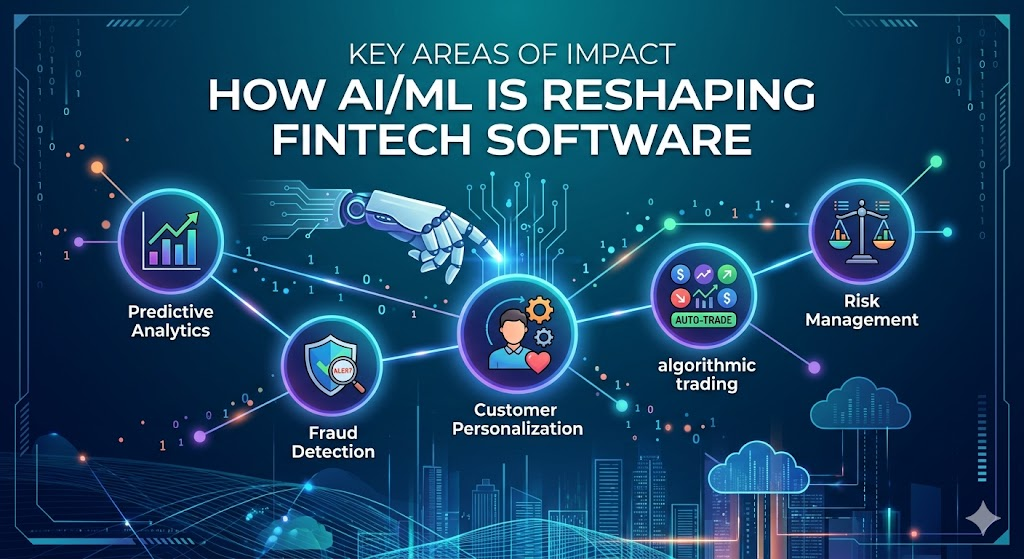
Key Areas of Impact: How AI/ML is Reshaping Fintech Software
The influence of AI and ML isn’t confined to a single corner of the fintech world; it’s a pervasive force. From safeguarding your hard-earned money to tailoring your investment portfolio, these technologies are making their mark in profound ways.
Enhanced Security and Fraud Detection
Let’s face it, security is paramount in finance. Nobody wants to wake up to find their account drained by fraudsters. AI and ML are revolutionizing how we combat financial crime. Traditional methods often rely on fixed rules, which can be bypassed by sophisticated criminals. AI, however, can learn normal user behavior patterns.
Behavioral Analytics for Anomaly Detection
Imagine your banking app suddenly noticing that transactions are originating from a new, unusual location, at a time you’d typically be asleep, for an unusually large amount. AI-powered behavioral analytics can flag this as an anomaly in real-time, even if the transaction doesn’t violate a predefined rule. It’s like having a super-vigilant security guard who knows your habits intimately and can spot even the slightest deviation. This continuous learning allows systems to adapt to new fraud tactics as they emerge, staying one step ahead of the bad guys.
Real-time Risk Assessment and Prevention
Beyond just fraud, AI helps assess risk in milliseconds. When you apply for a loan, for example, AI algorithms can sift through your financial history, credit reports, and even alternative data sources to provide a much more nuanced and accurate risk assessment. This not only speeds up the approval process but also allows lenders to offer better terms to lower-risk individuals, making financial services more accessible. It’s about making smarter, faster decisions to protect both the consumer and the institution.
Personalized Customer Experiences
Remember the days of generic email blasts and one-size-fits-all financial advice? Those are rapidly becoming a relic of the past. AI is enabling fintech companies to understand their customers on an individual level and offer truly personalized experiences.
AI-Powered Chatbots and Virtual Assistants
Ever needed help with your bank account at 2 AM? That’s where AI-powered chatbots come in. These intelligent virtual assistants can handle a vast array of customer inquiries, from checking balances and recent transactions to answering FAQs, all in natural language. They’re available 24/7, reducing wait times and freeing up human customer service agents for more complex issues. They learn from every interaction, becoming increasingly helpful and efficient over time.
Tailored Financial Advice and Product Recommendations
This is where things get really exciting. By analyzing your spending habits, income, savings goals, and even your risk tolerance, AI can offer personalized financial advice. It can suggest the best savings accounts, recommend investment strategies aligned with your objectives, or even alert you to potential overspending. It’s like having a dedicated financial advisor in your pocket, always looking out for your best interests, but without the hefty fees!
Optimizing Operations and Efficiency
The back-end of fintech software development is also being transformed. AI and ML are automating tedious, Fintech Software Development time-consuming tasks, leading to significant efficiency gains.
Algorithmic Trading and Investment Strategies
For investment firms, AI is a game-changer. Machine learning algorithms can analyze vast amounts of market data – news, social media sentiment, economic indicators, historical price movements – to identify trading opportunities and execute trades at speeds impossible for humans. This allows for more sophisticated and potentially more profitable trading strategies. It’s the next evolution of high-frequency trading, but powered by learning machines.
Automated Underwriting and Loan Processing
Think about the lengthy process of applying for a mortgage or a personal loan. AI is dramatically streamlining this. By automating data extraction from documents, performing risk assessments, and even generating loan offers, AI can significantly reduce the time it takes to process a loan application from weeks to mere minutes or hours. This not only benefits customers with faster access to funds but also reduces operational costs for lenders.
Improving Regulatory Compliance (RegTech)
The financial industry is heavily regulated, and staying compliant is a constant challenge. AI is empowering “RegTech” (Regulatory Technology) solutions to make compliance more efficient and effective.
Automated Reporting and Monitoring
Generating regulatory reports can be a manual and error-prone process. AI can automate the collection of data, its analysis, and the generation of reports required by regulatory bodies. It can also continuously monitor transactions and activities for potential compliance breaches, flagging them for human review much faster than manual methods.
Predictive Compliance and Risk Management
Instead of just reacting to compliance issues, AI can help predict them. By analyzing patterns in data, AI can identify potential areas of non-compliance before they become serious problems. This proactive approach can save companies significant fines and reputational damage. It’s like having a crystal ball that warns you of impending regulatory storms.
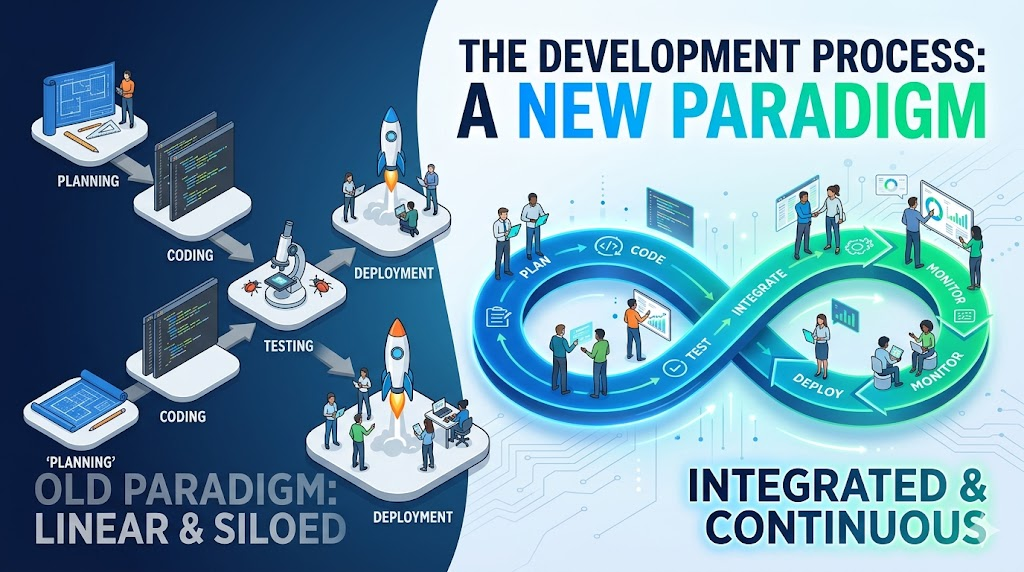
The Development Process: A New Paradigm
The impact of AI and ML isn’t just on the end product; it’s fundamentally changing how fintech software is developed.
Agile Methodologies Enhanced by AI
Agile development, with its iterative and adaptive approach, is a natural fit for AI integration. AI tools can help identify bottlenecks in the development pipeline, predict potential bugs, and even automate testing processes, making agile teams even more responsive and efficient. It’s like giving your development team superpowers.
Data-Driven Development and Continuous Improvement
With AI, development becomes even more data-driven. Instead of relying solely on developer intuition or user feedback, teams can leverage AI to analyze how users interact with the software in real-time. This allows for continuous improvement, where features are refined, and new ones are developed based on actual user behavior and performance metrics. It’s a feedback loop that never stops learning and improving.
The Evolving Skillset of Fintech Developers
This AI-driven shift means developers need new skills. Beyond traditional coding, they need to understand data science, machine learning principles, and how to work with AI frameworks. It’s an exciting time for developers to expand their expertise and contribute to truly cutting-edge solutions.
Challenges and Considerations
Of course, no technological revolution comes without its hurdles. Integrating AI and ML into fintech software development presents its own set of challenges.
Data Privacy and Ethical Concerns
Handling vast amounts of sensitive financial data raises significant privacy concerns. Ensuring that data is collected, stored, and used ethically and in compliance with regulations like GDPR is paramount. Trust is the bedrock of finance, and any breach of privacy can be catastrophic.
The Need for Robust Infrastructure and Expertise
Implementing sophisticated AI and ML models requires substantial computing power and specialized expertise. Fintech companies need to invest in robust infrastructure and hire or train skilled data scientists and AI engineers, which can be a significant undertaking.
Ensuring Fairness and Mitigating Bias
AI algorithms learn from data, and if that data contains historical biases (e.g., discriminatory lending practices), the AI can perpetuate or even amplify those biases. Developers must be vigilant in identifying and mitigating bias in their algorithms to ensure fairness and equitable access to financial services. It’s a critical ethical consideration.
The Future of Fintech: An AI-Driven Horizon
Looking ahead, the integration of AI and ML into fintech software development is only set to accelerate. We’re moving towards a future where financial services are not just digital, but also intelligent, proactive, and deeply personalized.
Hyper-Personalization and Predictive Finance
Imagine a financial system that anticipates your needs before you even realize them. AI will enable hyper-personalized financial products and services, offering solutions proactively based on predictive analysis of your financial life. It’s moving from reactive to proactive finance.
Democratization of Financial Services
AI has the potential to democratize access to sophisticated financial tools and advice. By lowering costs and increasing efficiency, AI-powered fintech solutions can bring high-quality financial services to underserved populations, truly leveling the playing field.
The Symbiotic Relationship: AI, ML, and Fintech
Ultimately, the relationship between AI, ML, and fintech is symbiotic. Fintech provides the data and the real-world problems, while AI and ML offer the intelligence and the solutions. This powerful partnership is not just improving existing services; it’s creating entirely new possibilities, making our financial futures brighter, more secure, and more accessible than ever before. It’s a thrilling ride, and we’re still just at the beginning!
Frequently Asked Questions (FAQs)
1. How can AI and ML help small businesses with their financial management?
AI and ML can offer small businesses sophisticated financial forecasting, automated bookkeeping, personalized cash flow management advice, and even fraud detection, all at a fraction of the cost of traditional methods. This empowers them to make better financial decisions and operate more efficiently.
2. Will AI replace human jobs in the fintech industry?
While AI will undoubtedly automate many routine tasks, leading to shifts in the job market, it’s more likely to augment human roles rather than replace them entirely. New roles focused on AI development, oversight, ethics, and complex problem-solving will emerge, and human expertise will remain crucial for strategic decision-making and customer empathy.
3. What is the biggest challenge in implementing AI in fintech software?
The biggest challenges often revolve around data quality and availability, ensuring data privacy and security, regulatory compliance, and the ethical implications of AI decision-making, particularly concerning bias.
4. How do AI-powered chatbots differ from traditional customer service?
AI-powered chatbots offer 24/7 availability, instant responses to common queries, and can handle a high volume of requests simultaneously. They also learn and improve over time, providing increasingly accurate and helpful interactions, whereas traditional customer service relies on human agents with limited availability and capacity.
5. Can AI help individuals make better investment decisions?
Yes, AI can analyze market trends, news sentiment, and individual risk profiles to provide personalized investment recommendations and even automate trading strategies. Robo-advisors, powered by AI, are already making sophisticated investment management more accessible to the average person.
Pingback: Mastering Agent Zero AI 9 Essential Best Practices for Success