
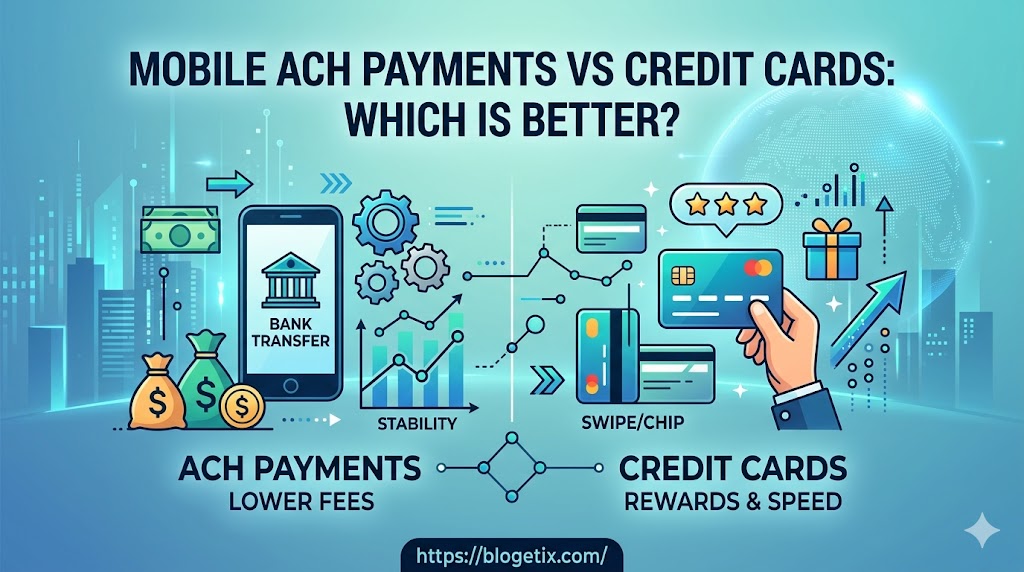
Mobile ACH Payments vs Credit Cards: Decoding the Best Payment Method for You
Let’s face it, when it comes to paying for things these days, our smartphones are practically glued to our hands. We order groceries, hail rides, and even settle our bills, all with a few taps and swipes. But have you ever stopped to really think about the magic happening behind those screens? Today, we’re diving deep into the world of mobile payments, specifically pitting two heavyweights against each other: Mobile ACH Payments and Credit Cards. Which one is going to be your financial sidekick? Let’s get into it!
Understanding the Contenders: ACH and Credit Cards
Before we jump into the mobile arena, it’s essential to understand the core technologies we’re comparing. Think of them as the foundation upon which mobile payments are built.
What Exactly is ACH? The Backbone of Electronic Funds Transfer
ACH stands for Automated Clearing House. Now, that might sound a bit… well, automated and dusty. But in reality, it’s the incredibly efficient network that facilitates direct deposits, direct payments, and business-to-business transactions in the United States. When you get paid via direct deposit, or when your utility bill is automatically debited from your bank account, chances are you’re using ACH. It’s a batch processing system, meaning transactions are grouped together and processed at specific times throughout the day. This efficiency is key to its cost-effectiveness.
Credit Cards: Convenience and Rewards at Your Fingertips
Credit cards are the seasoned veterans of the payment world. They offer a line of credit, allowing you to make purchases now and pay later. Beyond just a payment method, they’re often loaded with perks like rewards points, cashback, travel miles, and robust consumer protections against fraud. For many, they represent a familiar and trusted way to manage both everyday spending and larger purchases.
The Mobile Revolution: How Payments Go Digital
The shift to mobile has been nothing short of revolutionary. It’s not just about making payments from your phone, but about how the underlying technologies have adapted to provide a seamless, secure, and often faster experience.
Mobile ACH: Speed, Security, and Simplicity
When ACH goes mobile, it’s not the clunky, batch-processed system of yesteryear. Modern mobile ACH solutions leverage secure gateways and intuitive apps to initiate payments directly from your bank account. This means you can pay bills, send money to friends, or even make purchases online or in-app without needing to pull out your physical wallet.
The ACH Network: A Deeper Dive
The ACH network is managed by Nacha (formerly the National Automated Clearing House Association) and is overseen by the Federal Reserve and The Clearing House. It’s a robust, secure infrastructure that processes millions of transactions daily. When you authorize a mobile ACH payment, your bank securely communicates with the network to transfer funds from your account to the recipient’s.
Security Features of Mobile ACH
You might wonder, “Is it safe to link my bank account to an app?” Reputable mobile ACH providers employ multi-layered security measures. This includes encryption (scrambling your data so it can’t be read by unauthorized parties), tokenization (replacing sensitive data with unique identifiers), and often multi-factor authentication (requiring more than just a password to log in). Furthermore, your bank’s own security protocols are always in play.
Mobile Credit Card Payments: The Seamless Experience
Mobile credit card payments are perhaps what most people think of when they hear “mobile payments.” This encompasses everything from tapping your phone to pay at a store to using a credit card saved in an app for online purchases.
Digital Wallets and Contactless Payments
Think Apple Pay, Google Pay, or Samsung Pay. These digital wallets allow you to store tokenized versions of your credit cards. When you’re at a point-of-sale terminal that accepts contactless payments, you simply hold your phone near the reader, and the transaction is authorized securely and instantly. It’s incredibly convenient and often faster than fumbling for a physical card.
The Role of EMV Chips and Tokenization
The EMV chips on your physical credit cards and the tokenization used in mobile wallets are crucial security advancements. EMV chips create a unique transaction code for each purchase, making it much harder for counterfeit cards to be used. Tokenization, as mentioned with ACH, replaces your actual card number with a unique, one-time-use token for each transaction, meaning your real card details are never shared with the merchant. This significantly reduces the risk of data breaches.
Head-to-Head: Key Comparison Factors
Now that we’ve met our contenders, let’s put them head-to-head on the factors that matter most to you.
Transaction Speed: When Every Second Counts
For immediate, in-person transactions, both mobile ACH and credit card payments via digital wallets are lightning-fast. The actual processing of an ACH transaction can take a business day or two for settlement, but the initiation and authorization at the point of sale are near-instantaneous. Credit card transactions, especially via contactless methods, are also incredibly swift. Where ACH might show a slight delay is in settlement for certain types of transfers.
Fees and Costs: Understanding the Financial Impact
This is often where the biggest differences lie.
ACH Transaction Fees
Generally speaking, ACH transfers are significantly cheaper than credit card transactions, both for consumers and merchants. For consumers, many mobile ACH payments initiated from bank accounts are free. Merchants typically pay a much lower transaction fee for ACH compared to credit cards, often a flat fee or a very small percentage. This cost saving can be passed on to consumers in the form of discounts for choosing ACH.
Credit Card Processing Fees
Credit card companies and payment processors charge merchants fees for every transaction. These fees can range from 1.5% to 3.5% (or even higher for certain types of cards or businesses) of the transaction amount, plus potential fixed fees. These costs are an inherent part of accepting credit card payments and are typically absorbed by the merchant, though they can indirectly influence pricing.
Security and Fraud Protection: Who Offers More?
Both methods have robust security features, but they offer different types of protection.
- Mobile ACH: Relies on strong encryption, tokenization, and multi-factor authentication. Fraud protection is typically tied to your bank’s policies, which can be strong but might differ from credit card protections. Reversing an unauthorized ACH transaction can sometimes be more complex than with credit cards.
- Credit Cards: Offer excellent fraud protection. Most major credit card issuers have “zero liability” policies, meaning you won’t be held responsible for unauthorized charges. They also offer chargeback rights, where you can dispute a transaction if you don’t receive goods or services as promised, or if there’s an issue with the purchase. This provides a significant layer of consumer protection.
Rewards and Benefits: Maximizing Your Spending
This is where credit cards truly shine for many consumers.
- Mobile ACH: Typically, there are no direct rewards associated with using mobile ACH payments. The benefit is primarily cost savings.
- Credit Cards: Often come loaded with rewards programs like cashback, travel miles, points for merchandise, and sign-up bonuses. For those who can manage their spending responsibly and pay their balance in full, credit cards can offer substantial value through these perks.
Convenience and Accessibility: The User Experience
Both are highly convenient in the mobile space.
- Mobile ACH: Easy to set up if you have a bank account. Ideal for recurring payments, bill pay, and direct transfers where security and lower costs are paramount. The user interface for many mobile ACH apps is straightforward and intuitive.
- Credit Cards: Digital wallets make them incredibly easy to use for both online and in-person contactless payments. If you already use a digital wallet, adding and using credit cards is seamless. They’re widely accepted globally.
When to Choose Mobile ACH Payments
So, when should you lean towards using your mobile ACH option?
Ideal for Recurring Payments and Bill Pay
Think about your monthly subscriptions, utility bills, or loan payments. Setting these up as recurring ACH debits from your bank account is efficient, cost-effective for businesses, and ensures you don’t miss a payment. It streamlines your finances and reduces the need to manually enter payment details each time.
Beneficial for Business-to-Business (B2B) Transactions
Many businesses prefer ACH for invoices and payments because of the significantly lower transaction fees compared to credit cards. This can lead to substantial cost savings for both the sender and receiver, especially for high-value transactions.
When Lower Fees are a Priority
If you’re a consumer looking to avoid potential credit card fees (like annual fees or interest if you carry a balance) or if you’re a merchant aiming to reduce processing costs, ACH is often the more economical choice. You might even find merchants offering small discounts for ACH payments precisely because it saves them money.
When Credit Cards Shine Brightest
There are definitely situations where a credit card is your golden ticket.
Leveraging Rewards and Cashback Programs
If you’re a savvy spender who pays off your balance every month, you can effectively get a discount on all your purchases through credit card rewards. For travel enthusiasts, accumulating airline miles or hotel points can lead to free flights and stays. It’s like getting paid to spend!
For Purchases Requiring Buyer Protection
When buying expensive items, particularly online or from new vendors, the robust buyer protection offered by credit cards (like chargebacks) can provide invaluable peace of mind. If something goes wrong with the product or service, disputing the charge is often a straightforward process.
When Instant Access to Funds is Crucial (for consumers)
While both methods are fast at the point of transaction, if you need to quickly send money to someone who needs immediate access to it (and they aren’t set up for instant ACH), or if you need to make a purchase where settlement time is critical from a merchant’s perspective, credit cards often offer a more direct route for immediate fund availability due to how they are structured.
The Future of Mobile Payments: A Blended Approach?
The lines between these payment methods are blurring, and the future looks like a mix-and-match scenario.
Emerging Technologies and Trends
We’re seeing more platforms integrate both ACH and credit card options, sometimes even allowing users to choose their preferred method at checkout based on cost or rewards. Real-time payment networks are also evolving, promising even faster settlement for various transaction types. The focus is on offering consumers and businesses more choice and flexibility.
Making an Informed Decision for Your Needs
Ultimately, the “better” option isn’t a one-size-fits-all answer. It depends entirely on your personal financial habits, the type of transaction, and what you value most – be it rewards, security, cost savings, or convenience. Understanding the nuances of each will empower you to make the smartest choice for your wallet.
Frequently Asked Questions (FAQs)
Can ACH payments be reversed?
Yes, ACH payments can be reversed, but it’s typically a more involved process than with credit cards. There are specific rules and timeframes for initiating a reversal, often requiring proof of an unauthorized transaction. It’s not as simple as a credit card chargeback for dissatisfaction.
Are credit cards always more secure than ACH?
Not necessarily. Both use advanced security measures like encryption and tokenization. Credit cards offer stronger consumer protections against fraud and disputes. ACH security relies heavily on the integrity of the network and your bank’s security protocols.
Do mobile ACH payments have daily limits?
Yes, both mobile ACH and credit card transactions can have daily limits. These limits are often set by your bank for ACH and by your credit card issuer for credit card transactions. They are in place for security reasons to prevent large-scale fraud.
Which is better for online shopping, ACH or credit cards?
For online shopping, credit cards generally offer better buyer protection and rewards. However, if the merchant offers a discount for using ACH and you prioritize cost savings, or if you’re making a recurring subscription payment, ACH can be a good option.
Can I use mobile ACH for international payments?
Standard ACH is primarily a domestic (US) network. While there are international electronic funds transfer methods, direct mobile ACH as we’ve discussed is not typically used for cross-border transactions. International payments usually involve services like SWIFT, wire transfers, or specialized money transfer platforms.
Pingback: best payment gateways for indian e-commerce 2026