
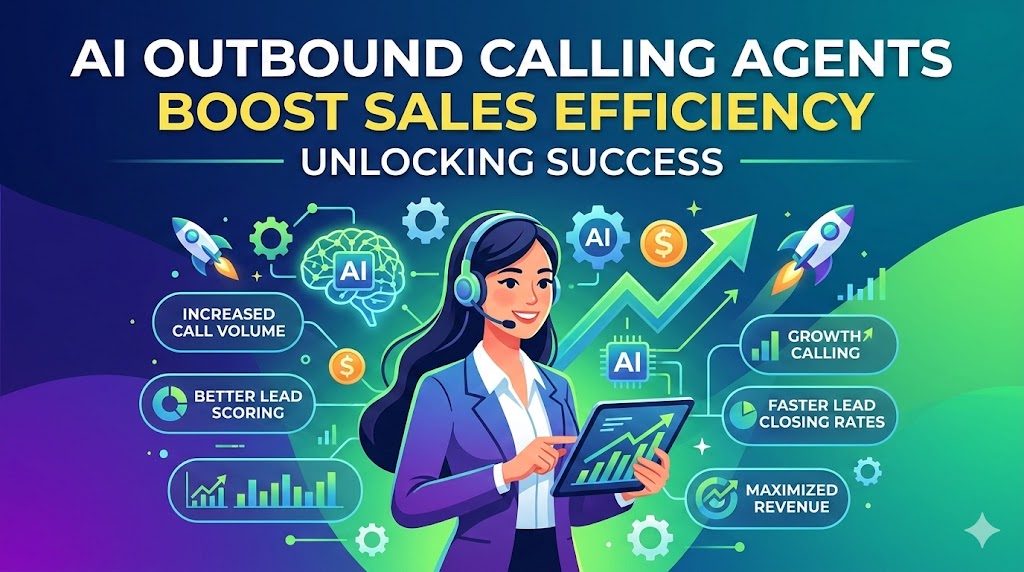
How AI Outbound Calling Agents Skyrocket Sales Efficiency: Your Path to Unlocking Success
Let’s face it, the world of sales is a relentless battlefield. For decades, outbound calling has been a cornerstone of sales strategies, a direct line to potential customers. But in today’s fast-paced, information-saturated digital age, the traditional approach is starting to feel like a relic. We’re talking about those endless hours spent dialing, leaving voicemails, and sifting through mountains of leads, only to find a handful of genuine opportunities. It’s exhausting, it’s inefficient, and frankly, it’s holding back so many businesses from reaching their full potential.
The Evolving Landscape of Sales: Why Traditional Outbound is Struggling
Think about your own experience as a consumer. How many cold calls do you receive in a week? How many of them actually lead to a meaningful conversation or a purchase? The truth is, people are more empowered than ever. They have access to more information, more choices, and less patience for interruptions that don’t add value. This shift means that the old ways of doing things, 80% of call centers are now using AI-based technologies the spray-and-pray method of outbound sales, are becoming increasingly ineffective.
The Human Bottleneck: Limitations of Manual Outbound
Our human sales agents are fantastic at building relationships, understanding nuanced needs, and closing deals. However, when it comes to the sheer volume of repetitive tasks involved in outbound calling, they hit a wall. Dialing, waiting for answers, leaving messages, logging calls – these are time-consuming activities that detract from the more strategic and relationship-building aspects of their job. It’s like asking a master chef to spend their entire day peeling potatoes; they can do it, but it’s not the best use of their unique skills. This “human bottleneck” limits scalability and can lead to agent burnout, a pervasive issue in the sales world.
Enter AI: The Game-Changer in Outbound Sales
Now, imagine a scenario where those repetitive, time-consuming tasks are handled with lightning speed and unwavering consistency. That’s where Artificial Intelligence steps in, and specifically, AI outbound calling agents. These aren’t just glorified auto-dialers; they are sophisticated tools designed to augment, not replace, human sales teams, dramatically boosting efficiency and effectiveness.
What Exactly Are AI Outbound Calling Agents?
At their core, AI outbound calling agents are software systems that leverage advanced AI technologies to automate and optimize the process of reaching out to potential customers. They can initiate calls, engage in conversations, qualify leads, gather information, and even schedule follow-ups, all with minimal human intervention. Think of them as your tireless, always-on sales assistant, working in the background to fuel your human sales team’s success.
Beyond Simple Automation: The Intelligence Factor
What sets AI agents apart from older automation tools is their intelligence. They don’t just follow a script blindly. They can understand and Guide natural language, adapt to the flow of a conversation, learn from interactions, and make decisions based on data. This means they can engage prospects in a more human-like and personalized way, leading to better engagement rates and a more positive customer experience.
The Core Benefits: How AI Agents Supercharge Sales Efficiency
The advantages of integrating AI outbound calling agents into your sales strategy are multifaceted and profound. They touch upon every aspect of the sales cycle, from lead generation to closing.
Unprecedented Lead Qualification and Prioritization
One of the most significant benefits is the ability to qualify and prioritize leads with incredible speed and accuracy. AI agents can engage with a vast number of prospects, asking pre-defined questions to gauge interest, identify needs, and determine their fit with your product or service. This means your human agents can spend their valuable time focusing on leads that are already warm and genuinely interested, dramatically increasing their conversion rates.
Focusing Efforts on the Most Promising Prospects
Instead of chasing every single lead, AI agents act as a smart filter. They can identify the “whale” leads, those most likely to convert, and pass them directly to your top-performing human agents. This strategic allocation of resources ensures that your sales team is always working on the most impactful opportunities, leading to faster deal cycles and higher revenue.
24/7 Availability and Scalability: Never Miss an Opportunity
The traditional workday has its limits, but AI agents don’t. They can operate around the clock, reaching out to prospects across different time zones without needing breaks or sleep. This 24/7 availability ensures that no lead goes unanswered, and no potential sale is missed, especially for businesses with a global customer base or those operating in industries with non-traditional business hours. Furthermore, AI systems can scale up or down effortlessly to meet demand, a feat that would be incredibly costly and time-consuming with human agents alone.
Enhanced Personalization at Scale
“Personalization” is a buzzword that’s often overused, but AI agents are making it a tangible reality. By analyzing data from CRM systems and past interactions, AI can tailor the conversation to each individual prospect. It can recall previous interactions, reference specific interests, and deliver a message that feels relevant and engaging, not generic.
Crafting Tailored Conversations with Every Lead
Imagine an AI agent that knows a prospect’s industry, their pain points, and their preferred communication style. It can then adapt its tone and talking points accordingly. This level of personalized engagement, delivered at scale, is something that was previously unattainable with manual calling. It builds rapport and trust from the very first touchpoint.
Reduced Agent Burnout and Increased Job Satisfaction
Let’s talk about your human team. Constantly making cold calls, facing rejection, and dealing with repetitive tasks can lead to significant burnout. By offloading these tasks to AI agents, you free up your human
sales professionals to focus on what they do best: building relationships, strategizing, and closing deals. This not only boosts their morale and job satisfaction but also allows them to operate at a higher level, leveraging their emotional intelligence and complex problem-solving skills.
Data-Driven Insights for Continuous Improvement
Every conversation, every interaction an AI agent has, generates valuable data. This data can be analyzed to identify trends, understand customer objections, pinpoint successful talking points, and reveal areas for improvement in your sales process. This continuous feedback loop allows you to refine your strategies, optimize your scripts, and make smarter, data-backed decisions. It’s like having a personal coach for your entire sales team, constantly highlighting how to get better.
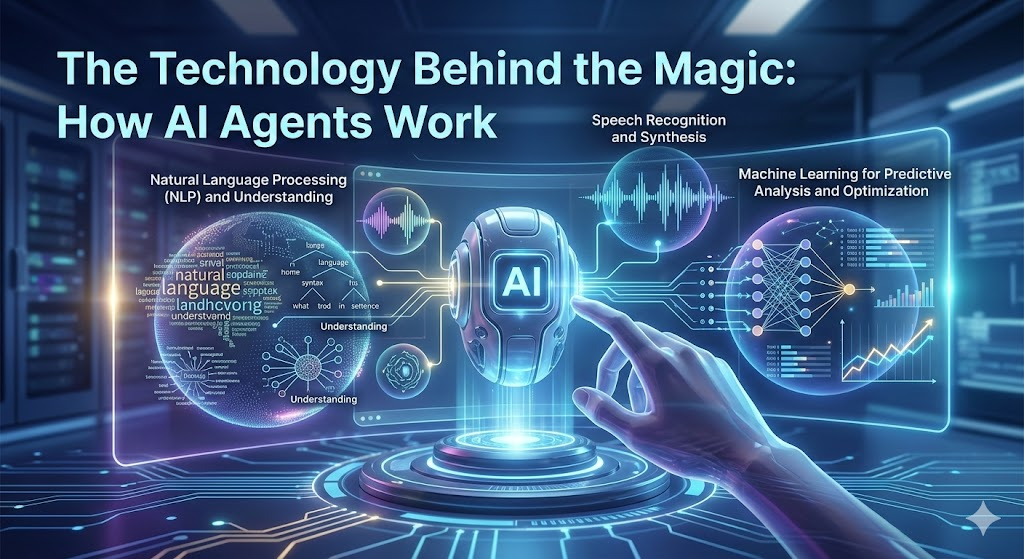
The Technology Behind the Magic: How AI Agents Work
So, how do these AI agents actually pull off these impressive feats? It’s a symphony of cutting-edge technologies working in harmony.
Natural Language Processing (NLP) and Understanding
NLP is the backbone of any conversational AI. It allows the AI to understand the nuances of human language, including intent, sentiment, and context. This means the AI can comprehend what a prospect is saying, even if they don’t speak in perfectly formed sentences, and respond in a relevant and coherent manner.
Speech Recognition and Synthesis
For AI agents to conduct phone calls, they need to be able to understand spoken words (speech recognition) and generate spoken words (speech synthesis). Advanced speech recognition can accurately transcribe conversations, even with background noise or accents. Speech synthesis allows the AI to speak in a natural-sounding voice, making the interaction more pleasant for the prospect.
Machine Learning for Predictive Analysis and Optimization
Machine learning is what gives AI agents their “intelligence.” By analyzing vast amounts of data from past calls and sales outcomes, ML algorithms can identify patterns, predict which leads are most likely to convert, and optimize the calling strategy for better results. This includes learning which times of day are best to call, which scripts are most effective, and how to best handle common objections.
Implementing AI Outbound Calling: A Strategic Approach
Adopting AI outbound calling agents isn’t just about plugging in a new tool; it requires a thoughtful, strategic approach.
Identifying the Right Use Cases for Your Business
Before diving in, assess where AI agents can have the biggest impact. Are you struggling with lead qualification? Do you need to increase your outreach volume? Are your agents bogged down by administrative tasks? Pinpointing these areas will help you tailor the AI’s deployment for maximum ROI.
Integration with Existing CRM and Sales Tools
For AI agents to be truly effective, they need to seamlessly integrate with your existing Customer Relationship Management (CRM) system and other sales technology stacks. This ensures that data flows smoothly between systems, providing a holistic view of your prospects and sales pipeline. It’s like connecting the different departments in a company so everyone is on the same page.
Training and Human Oversight: The Crucial Partnership
While AI is powerful, it’s not a “set it and forget it” solution. Your human sales team plays a vital role in overseeing the AI’s performance, providing feedback, and handling complex interactions that require human empathy and strategic thinking. Training your team on how to work with the AI, rather than just around it, is key to unlocking its full potential. Think of it as a collaborative partnership where AI handles the heavy lifting, and humans bring the finesse and strategic decision-making.
Real-World Impact: Success Stories and Future Potential
The impact of AI outbound calling agents is not just theoretical; it’s being demonstrated by businesses across various industries.
Case Studies: Tangible ROI and Efficiency Gains
Companies are reporting significant improvements in key sales metrics: higher lead conversion rates, shorter sales cycles, increased appointment setting, and a substantial reduction in the cost per lead. These aren’t marginal gains; they are transformative shifts that directly impact the bottom line. For instance, a B2B software company might see a 30% increase in qualified leads passed to their sales team, or an e-commerce business could reduce its customer service wait times by 50% through AI-driven outreach for order updates.
The Future of Sales: A Collaborative Human-AI Ecosystem
The future of sales isn’t about AI replacing humans; it’s about a powerful synergy. AI agents will handle the volume, the data analysis, and the initial engagement, allowing human sales professionals to focus on high-value activities like complex problem-solving, negotiation, and building deep customer relationships. This collaborative ecosystem will lead to more efficient, more personalized, and ultimately, more successful sales operations.
Addressing Common Concerns and Myths
It’s natural to have questions and concerns when adopting new technology, especially one as advanced as AI.
Will AI Replace Human Sales Agents?
This is perhaps the most common concern, and the short answer is: no, not entirely. AI outbound calling agents are designed to augment human capabilities, not replace them. They excel at repetitive tasks and data processing, freeing up human agents to focus on the aspects of sales that require empathy, strategic thinking, and complex relationship building – skills that AI currently cannot replicate. The role of the human sales agent will evolve, becoming more strategic and advisory.
The Ethics of AI in Sales
Ethical considerations are paramount. Transparency is key. Customers should be aware when they are interacting with an AI. Data privacy must be rigorously protected. And the AI must be programmed to avoid discriminatory practices or manipulative tactics. Responsible implementation ensures that AI is used to enhance customer experience and build trust, not erode it.
Conclusion: Embracing the Future of Sales Efficiency
The era of AI-powered outbound calling is here, and it’s transforming the sales landscape at an unprecedented pace. By automating tedious tasks, enhancing personalization, and providing invaluable data insights, AI outbound calling agents are not just boosting sales efficiency; they are unlocking new levels of success for businesses willing to embrace this powerful technology. The companies that strategically integrate AI into their sales operations will be the ones to gain a significant competitive edge, driving revenue growth and building stronger customer relationships in the process. It’s time to stop just calling and start truly connecting, powered by intelligence.
Frequently Asked Questions (FAQs)
1. How quickly can AI outbound calling agents be implemented?
The implementation timeline can vary depending on the complexity of your existing systems and the specific AI solution you choose. However, many platforms offer relatively rapid deployment, often within weeks, especially for standard use cases.
2. Can AI outbound calling agents handle complex sales objections?
While AI agents are becoming increasingly sophisticated, they are best suited for handling common objections and qualifying leads. For highly complex or emotionally charged objections, a seamless handover to a human agent is usually the most effective approach.
3. What kind of data does an AI outbound calling agent need to be effective?
AI agents thrive on data. This includes information from your CRM, such as contact details, previous interaction history, and customer segmentation data. The more relevant data the AI has access to, the more personalized and effective its interactions will be.
4. Is it possible to customize the AI’s personality and tone?
Yes, many AI outbound calling platforms allow for customization of the AI’s voice, tone, and even its conversational style to align with your brand’s identity and target audience.
5. How do AI outbound calling agents improve the customer experience?
By providing instant responses, 24/7 availability, personalized interactions based on data, and reducing the frustration of repetitive or irrelevant calls, AI outbound calling agents can significantly enhance the overall customer experience and lead to higher satisfaction rates.
Pingback: Discover Grok AI Free Plans and Alternatives Unveiled