
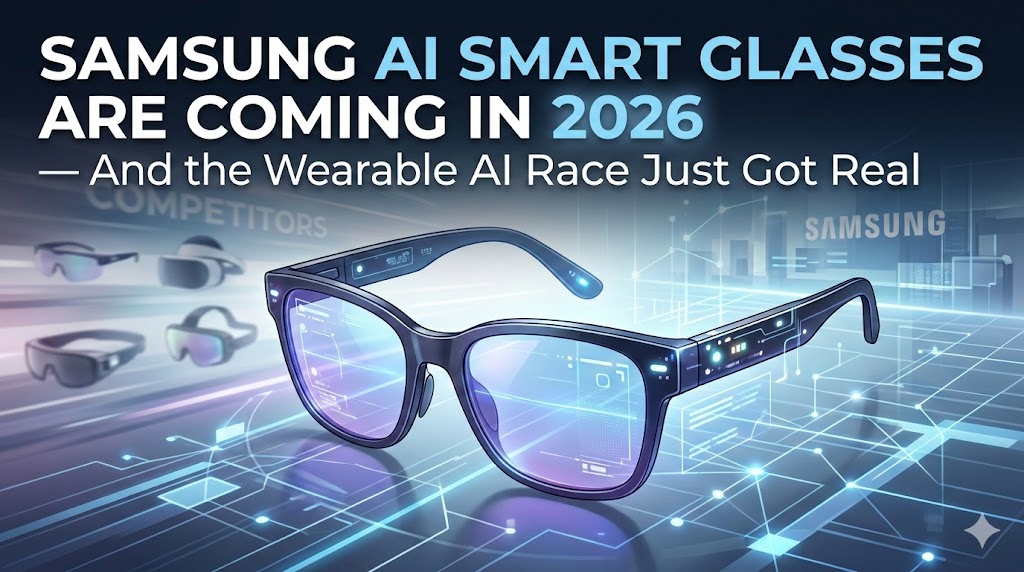
Samsung AI Smart Glasses: The 2026 Frontier of Wearable AI
Okay, let’s talk about the future. Specifically, let’s dive into the exciting, albeit speculative, possibility that Samsung is gearing up to drop AI-powered smart glasses in 2026. If the whispers and industry buzz are anything to go by, this isn’t just another gadget; it’s a potential game-changer that could redefine what we mean by “wearable technology” and heat up the wearable AI race like never before. Imagine a world where information is seamlessly layered onto your reality, where your environment talks to you, and where your digital assistant is literally right before your eyes. Sounds like science fiction, right? Well, Samsung might just be making it a reality.
The Wearable AI Race: A Quick Recap
Before we get too far ahead of ourselves, let’s set the stage. The idea of wearable tech isn’t exactly new. We’ve had smartwatches for ages, fitness trackers have become ubiquitous, and even early attempts at smart glasses have come and gone.
Early Forays and the Dawn of Smart Eyewear
Remember Google Glass? It was a bold, albeit controversial, first step. It showed us a glimpse of what augmented reality could do, but perhaps it was a little too early for its time, facing hurdles in design, battery life, and public perception. Since then, the concept has been simmering, with various companies experimenting and refining the technology.
The Current Landscape: Who’s In the Running?
Right now, the wearable AI space is buzzing with activity. Apple’s Vision Pro has certainly made waves, showcasing an incredibly advanced (and expensive) mixed-reality headset. Meta is heavily invested in its Quest line and the metaverse. Other players are dabbling, but the market for truly integrated, everyday AI smart glasses is still largely untapped. This is precisely the kind of opening Samsung, a titan of consumer electronics, loves to exploit.
Samsung’s Strategic Entry: Why Now?
So, why would Samsung jump into this arena in 2026? It’s not just about keeping up; it’s about leading. Samsung has a massive advantage, and the timing feels ripe.
Leveraging AI Prowess: Samsung’s Unfair Advantage
Samsung isn’t just a hardware company; they’re a powerhouse in AI development. From their own AI assistants like Bixby (which, let’s be honest, has room to grow but is a foundation) to their extensive research in machine learning and neural networks, they have the brains to power sophisticated AI features. Imagine those glasses understanding context, recognizing objects, and providing proactive assistance – that’s AI at its finest, and Samsung has been building towards this.
Ecosystem Integration: The Power of the Samsung Galaxy
Here’s where Samsung really shines. Their strength lies in their vast ecosystem. Think about it:
Seamless Connectivity with Smartphones and Other Devices
Your Samsung phone, tablet, earbuds, watch – all of it could seamlessly connect and communicate with these smart glasses. This isn’t just about pairing devices; it’s about creating a unified experience. Your notifications appear discreetly, calls are handled with a glance, and controlling your smart home devices could be as simple as looking at them and issuing a voice command.
Data Synergy for Smarter Insights
When all your Samsung devices work together, they generate a wealth of data. This data, when processed by AI, can lead to incredibly personalized and useful insights. Your glasses could learn your routines, anticipate your needs, and offer suggestions based on your activity, location, and even your mood, all thanks to the aggregated data from your Samsung universe.
What to Expect: Imagining Samsung’s AI Smart Glasses
Okay, let’s put on our futuristic hats and dream a little. What could Samsung’s AI smart glasses actually be like?
Design and Comfort: Blending Style with Functionality
First things first: they need to look good. Nobody wants to wear bulky, awkward tech on their face all day. We can expect Samsung to prioritize sleek, discreet designs that resemble regular eyewear. Comfort will be key, with lightweight materials and customizable fits. Think less “cyborg” and more “stylish accessory with a supercomputer inside.”
Core AI Features: Beyond Basic Notifications
This is where the “AI” in AI Smart Glasses really comes into play. Forget just seeing text messages. We’re talking about a whole new level of interaction with your world.
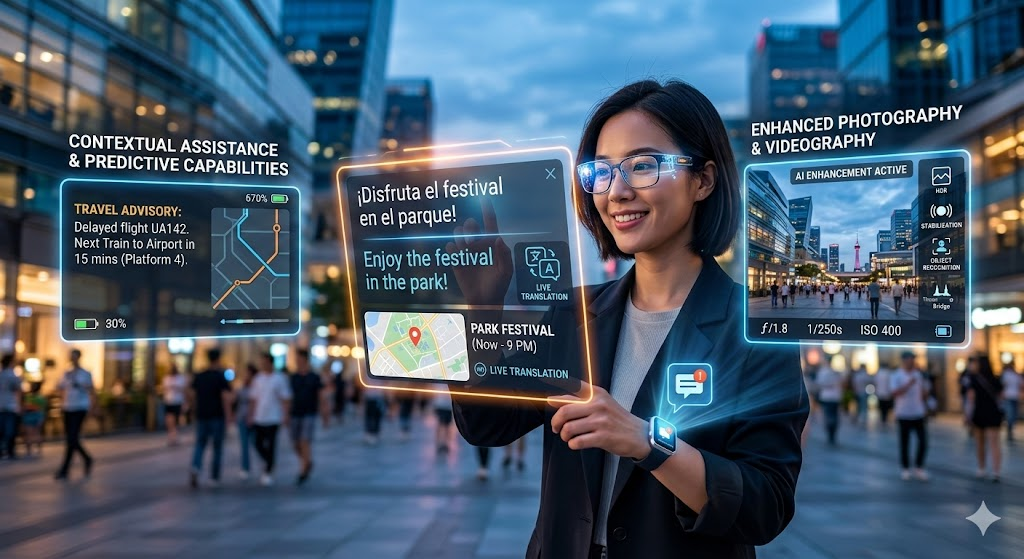
Real-time Translation and Information Overlay
Imagine walking through a foreign city and seeing street signs and menus instantly translated in your field of vision. Or looking at a historical landmark and getting a brief, contextual overview to appear. This could revolutionize travel and learning.
Contextual Assistance and Predictive Capabilities
Heading to a meeting? Your glasses could discreetly show you the agenda or the name of the person you’re meeting as they approach. Trying to find something in your messy garage? Point your gaze, and perhaps a virtual arrow appears showing you where it is (assuming you’ve cataloged it, of course!). The AI could learn your habits and offer help before you even realize you need it.
Enhanced Photography and Videography
Hands-free recording, capturing moments from your unique perspective, or even using AI to instantly enhance photos and videos as you take them. This could be a content creator’s dream.
User Interface and Control: Intuitive and Effortless
How do you interact with this magic? We can assume a blend of voice commands, subtle gestures (a tap on the frame, a nod), and perhaps even eye-tracking. The goal will be to make it feel as natural as possible, minimizing the need to pull out your phone.
The Impact on the Wearable AI Race
If Samsung does indeed launch powerful AI smart glasses, it’s not just a win for them; it’s a seismic event for the entire industry.
Raising the Bar for Competitors
Samsung’s entry, especially with their established brand name and ecosystem, would force other players to step up their game. It would legitimize the market further and accelerate innovation across the board. Apple, Meta, and others would have to react, leading to a faster evolution of the technology.
Paving the Way for Mass Adoption
While current high-end AR headsets are niche, a well-executed, stylish, and reasonably priced (let’s hope!) product from Samsung could be the catalyst for widespread adoption. It could move smart glasses from a niche tech gadget to an everyday essential, much like smartphones did.
Challenges and Considerations
Of course, it’s not all sunshine and augmented reality. There are significant hurdles Samsung (and anyone in this space) will need to overcome.
Privacy and Data Security Concerns
Having cameras and sensors constantly observing the world raises major privacy questions. How is our data being collected, stored, and used? Transparency and robust security measures will be paramount to gaining consumer trust. We’ll all be watching closely to see how Samsung addresses this.
Battery Life and Processing Power
Running sophisticated AI and display technology requires a lot of juice. Achieving all-day battery life in such a small form factor is a monumental engineering challenge. Similarly, processing complex AI tasks on-device will require significant advancements in miniaturization and power efficiency.
Societal Acceptance and Ethical Implications
Will people be comfortable interacting with others who are wearing smart glasses? Will there be a digital divide between those who have access to this enhanced reality and those who don’t? These are complex questions that technology alone can’t solve, but they’re crucial for the technology’s success.
The Future is Now: A Glimpse into 2026 and Beyond
Whether Samsung launches in 2026 or slightly later, the direction is clear. Wearable AI is no longer a distant dream; it’s a rapidly approaching reality. The convergence of AI, miniaturization, and advanced display technology is set to transform how we interact with information and the world around us. If Samsung can deliver on the promise of intelligent, stylish, and seamlessly integrated AI smart glasses, they won’t just be joining the race; they might just be setting the pace for the next decade of personal technology. Get ready, because the future is about to get a whole lot more… visible.
Frequently Asked Questions (FAQs)
- What are the main AI features expected in Samsung’s 2026 smart glasses?
While unconfirmed, we can anticipate features like real-time language translation, contextual information overlays (e.g., navigation, object recognition), AI-powered personal assistance, and enhanced camera/video capabilities. The core idea is to use AI to make the augmented reality experience more intuitive and useful for everyday tasks. - How will Samsung’s AI smart glasses integrate with other Samsung devices?
Samsung is known for its ecosystem approach. We expect seamless connectivity with Galaxy smartphones, tablets, earbuds, and smartwatches. This integration could allow for shared data, unified notifications, and cross-device control, creating a more cohesive user experience. - What are the biggest challenges Samsung might face with these smart glasses?
Key challenges include achieving long battery life in a compact design, ensuring robust privacy and data security for users, developing intuitive user interfaces that don’t feel intrusive, and managing the societal acceptance of wearable cameras and AI. - Will these smart glasses replace smartphones?
It’s highly unlikely that smart glasses will completely replace smartphones in 2026. Instead, they are more likely to act as a complementary device, enhancing smartphone functionality and providing hands-free access to information and AI assistance. Think of them as an extension, not a replacement. - What makes the “wearable AI race” so significant now?
The wearable AI race is significant because advancements in AI processing, miniaturization of hardware, and improving battery technology have reached a point where truly functional and potentially stylish AI-powered wearables are becoming feasible. Companies like Samsung and Apple are investing heavily, signaling a shift from basic wearables to more intelligent, integrated devices that can profoundly change our daily lives.
Pingback: AI 5 340 vs i3 1315U: The Critical Flaw in Budget Laptops for 2026