
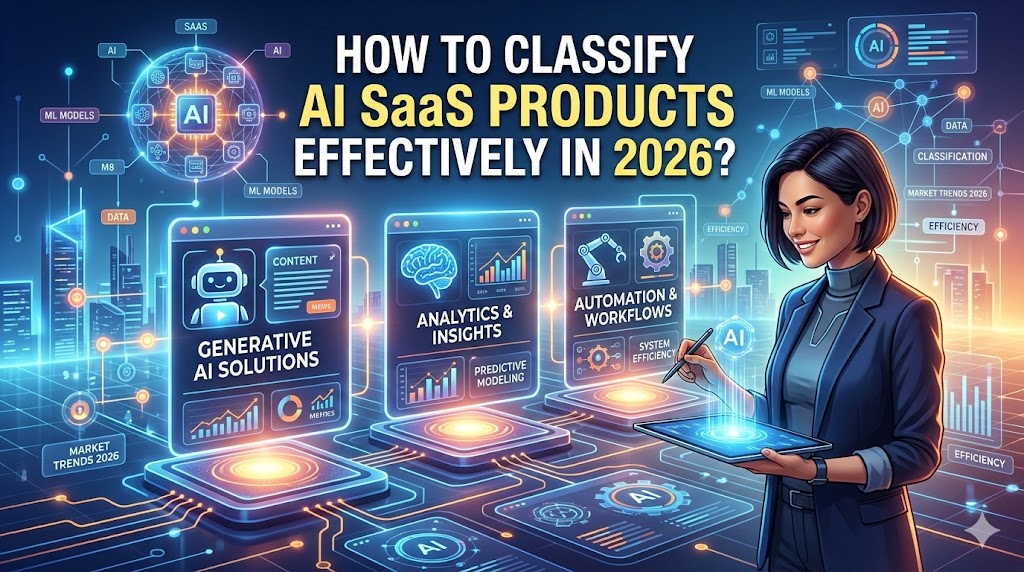
Deciphering the AI SaaS Landscape: Essential Classification Criteria
Why Classifying AI SaaS Products Matters: Beyond the Buzzwords
Let’s face it, the world of Artificial Intelligence (AI) and Software as a Service (SaaS) is exploding, isn’t it? Every other day, there’s a new tool promising to revolutionize your business with AI. But with this rapid growth comes a bit of a muddle. How do you actually make sense of it all? This is where classification criteria come in. Think of it like sorting your spices – you wouldn’t just chuck them all in one jar, would you? You group them by type, by what they’re used for. Similarly, understanding the criteria for classifying AI SaaS products helps us cut through the noise, find what we actually need, and build a clearer picture of this dynamic market. It’s not just about pretty labels; it’s about making smart, informed decisions.
Boosting Discoverability and Targeted Marketing
For starters, clear classification makes finding the right AI SaaS tool a whole lot easier. If you’re a small business owner struggling with customer service, you don’t want to sift through AI tools designed for complex financial modelling. When AI SaaS products are neatly categorized, it’s like having a super-efficient search engine. This directly impacts marketing too. Vendors can pinpoint their ideal customers, crafting messages that truly resonate. Instead of shouting into the void, they can speak directly to the specific pain points of, say, a marketing manager needing AI-powered campaign analysis, or a doctor looking for AI assistance in diagnosing medical images. It’s about precision, not just volume.
Informing Investment and Development Decisions
Beyond just finding products, classification is a goldmine for investors and product developers. Investors can identify emerging trends and promising market segments more effectively. If they see a surge in AI SaaS tools for sustainable agriculture, for instance, they can allocate resources accordingly. For product developers, understanding how their offering fits into the existing landscape is crucial. Is their AI chatbot for customer support a niche solution or a broad-reaching platform? This clarity helps them refine their product roadmap, identify gaps in the market, and avoid stepping on too many toes with overly similar offerings. It’s a strategic compass, guiding where to build and where to invest.
Core Classification Pillars: A Deep Dive
So, what are these all-important classification criteria? While the field is vast, we can break down AI SaaS products into several fundamental pillars. These aren’t rigid boxes, mind you – many products will straddle multiple categories – but they provide a robust framework for understanding.
1. Functionality and Core AI Capability
This is arguably the most intuitive way to classify AI SaaS. What does the AI actually do? At its heart, what kind of artificial intelligence is powering the service?
Machine Learning (ML) Driven Solutions
Many AI SaaS products are built upon the foundation of Machine Learning. These tools learn from data to make predictions, identify patterns, or automate tasks. Think of your email spam filter – that’s ML at work! In the SaaS world, this could be anything from predictive maintenance software for industrial equipment to customer churn prediction tools for subscription businesses. They excel at finding the needle in the haystack of data.
Natural Language Processing (NLP) Focused Platforms
If a SaaS product can understand, interpret, and generate human language, it’s likely leveraging NLP. This is the magic behind chatbots that can hold surprisingly coherent conversations, sentiment analysis tools that gauge customer feedback, and translation services that break down language barriers. It’s all about giving machines a grasp of our words.
Computer Vision and Image Analysis Tools
This category is for AI SaaS that “sees.” Using computer vision, these tools can analyze images and videos to identify objects, detect anomalies, or even understand complex scenes. Examples include medical imaging analysis for diagnosis, quality control systems in manufacturing that spot defects, and security systems that can recognize faces or unusual activity.
Predictive Analytics and Forecasting Software
While often overlapping with ML, predictive analytics focuses specifically on using historical data to forecast future outcomes. These AI SaaS products are invaluable for businesses looking to anticipate market trends, predict sales figures, or identify potential risks before they materialize. They offer a glimpse into what’s next.
2. Industry Vertical and Target Audience
Who is this AI SaaS product for? And what specific industry pain points does it address? This classification is vital for understanding market fit and identifying specific use cases.
AI SaaS for Healthcare
The healthcare industry is a massive adopter of AI. This segment includes tools for drug discovery, personalized treatment plans, patient monitoring, administrative task automation, and diagnostic assistance. Think AI helping doctors make faster, more accurate diagnoses or streamlining hospital operations.
AI SaaS for Finance and FinTech
In the world of finance, AI is revolutionizing everything from fraud detection and risk assessment to algorithmic trading and personalized financial advice. AI SaaS here aims to increase efficiency, reduce risk, and improve customer experience in banking, insurance, and investment.
AI SaaS for Marketing and Sales
This is a hotbed for AI SaaS! Products in this vertical help with lead generation and scoring, personalized advertising, content creation and optimization, customer segmentation, and sales forecasting. It’s all about making marketing and sales efforts smarter and more effective.
AI SaaS for E-commerce and Retail
From optimizing product recommendations and inventory management to personalizing customer journeys and predicting demand, AI SaaS is transforming online and offline retail. Think of those eerily accurate “you might also like” suggestions on shopping sites – that’s often AI SaaS in action.
3. Deployment Model and Technical Architecture
How is the AI SaaS delivered, and what’s under the hood? This aspect delves into the technicalities of how the service is hosted and integrated.
Cloud-Native AI SaaS
This is the most common model. These solutions are built and deployed entirely on cloud infrastructure, offering scalability, flexibility, and accessibility. Users can access them from anywhere with an internet connection, and the provider handles all the underlying IT management.
Hybrid AI SaaS Solutions
Some AI SaaS products adopt a hybrid approach, perhaps keeping sensitive data on-premises for security or compliance reasons while leveraging cloud-based AI processing power. This offers a blend of control and the benefits of cloud computing.
4. Level of AI Integration and Autonomy
How deeply is AI embedded in the product, and how much decision-making power does it have? This is a spectrum, and understanding where a product falls is key.
Augmented Intelligence Tools
These are AI tools designed to assist humans, not replace them. They provide insights, automate repetitive tasks, or offer recommendations, but the final decision-making power rests with the human user. Think of an AI assistant suggesting email replies but letting you choose which one to send.
Fully Autonomous AI Systems
These are AI systems that can operate and make decisions independently, without direct human intervention for each action. Examples might include automated trading bots or AI-powered manufacturing processes that self-correct. This represents a higher level of AI maturity and capability.
Navigating Nuances: Advanced Classification Considerations
Beyond these core pillars, a few other factors can help us refine our understanding of AI SaaS products.
Data Requirements and Handling
Different AI SaaS products have varying appetites for data. Some require vast amounts of specific, labelled data to train their models effectively, while others can operate with less. The way a SaaS product handles this data – its privacy, security, and ethical sourcing – is also a critical differentiator. Does it use anonymized data? Does it offer data governance features?
Ethical AI and Compliance Standards
As AI becomes more powerful, ethical considerations are paramount. AI SaaS products can be classified by their adherence to ethical AI principles (fairness, transparency, accountability) and their compliance with relevant regulations (like GDPR or industry-specific mandates). Is the AI biased? Is its decision-making process explainable?
Integration Capabilities and Ecosystem Fit
No software exists in a vacuum. How well does an AI SaaS product integrate with other existing business tools and platforms (like CRMs, ERPs, or marketing automation software)? Its ability to fit into a broader tech ecosystem is a significant classification factor, especially for enterprise solutions.
Putting Classification into Practice: A User’s Guide
So, how do we actually use this information? Whether you’re a buyer or a vendor, understanding these classification criteria is incredibly beneficial.
For Buyers: Streamlining Your Search
When you’re on the hunt for an AI SaaS solution, start by defining your needs based on these criteria. What specific AI capability do you need (NLP, ML)? Which industry are you in? What level of autonomy are you comfortable with? By answering these questions, you can filter out irrelevant options and focus on tools that are genuinely designed for your challenges. It’s like using a detailed map instead of just a compass.
For Vendors: Refining Your Market Position
For AI SaaS providers, clearly understanding your own classification is key to effective go-to-market strategies. Who is your ideal customer? What core AI technology drives your product? How does it stand out from competitors in your niche? Articulating your classification helps you craft compelling messaging, target the right audience, and position your product effectively in a crowded marketplace.
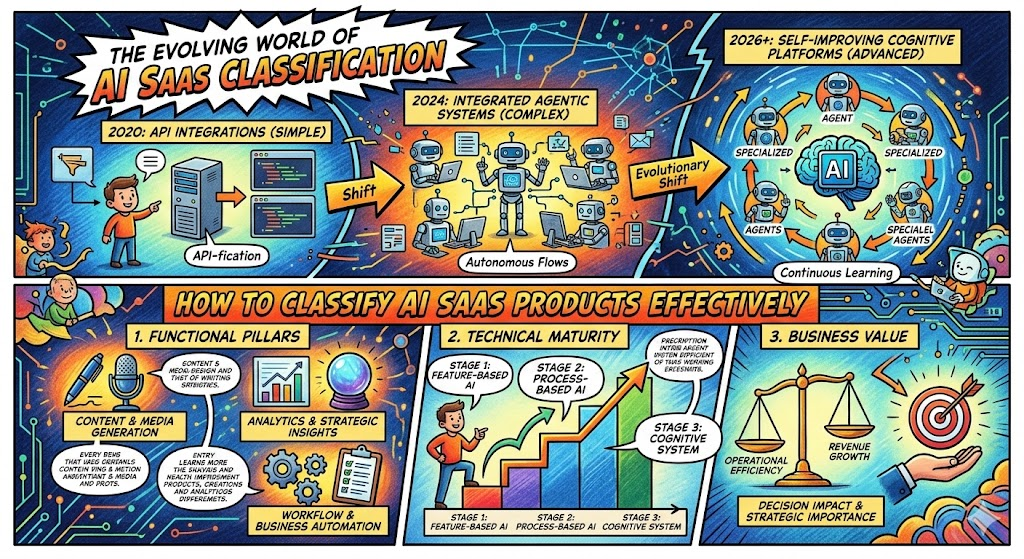
The Evolving World of AI SaaS Classification
It’s important to remember that the AI SaaS landscape isn’t static; it’s a constantly moving target. New AI breakthroughs happen regularly, leading to novel product categories and functionalities.
Emerging AI Technologies and Their Impact
Think about areas like Generative AI, which has exploded in popularity. Products leveraging large language models (LLMs) for content creation, code generation, or even art production are creating entirely new sub-categories within AI SaaS. As these technologies mature, our classification methods will need to adapt.
The Importance of Dynamic Classification
Because of this rapid evolution, classification shouldn’t be a one-time exercise. It needs to be dynamic. Regularly reassessing how your product (or the products you’re evaluating) fits into the market, considering new capabilities and emerging trends, is essential for staying relevant and making informed decisions.
Conclusion: Towards a Clearer AI SaaS Future
Navigating the intricate world of AI SaaS doesn’t have to be a bewildering experience. By understanding and applying these core classification criteria – from functionality and industry vertical to deployment models and levels of AI integration – we can bring much-needed clarity. It empowers buyers to find the right tools more efficiently and helps vendors carve out their unique space in the market. As AI continues its relentless march forward, a robust classification framework will be our essential guide, ensuring we harness its power effectively and responsibly.
Frequently Asked Questions (FAQs)
What is the most common type of AI SaaS product?
Currently, AI SaaS products driven by Machine Learning (ML) and Natural Language Processing (NLP) are among the most common. This is due to the widespread applicability of these technologies in areas like customer service (chatbots, sentiment analysis), marketing (personalization, lead scoring), and general business automation.
How can I determine the exact classification of an AI SaaS product?
To determine a product’s classification, look at its stated core functionality (what AI capability does it primarily use?), the industry or specific business problem it aims to solve, and its level of AI integration (does it assist or operate autonomously?). Vendor documentation, product demos, and case studies are excellent sources of this information.
Are there standardized classification systems for AI SaaS?
While there isn’t one single, universally adopted, official standard like an ISO certification for AI SaaS classification, industry analysts, market research firms, and cloud providers often develop their own frameworks. These frameworks typically group products based on the criteria we’ve discussed: functionality, vertical, and application.
How does the industry vertical affect AI SaaS classification?
Classifying by industry vertical is crucial because AI’s application and regulatory requirements vary significantly across sectors. An AI SaaS tool for healthcare will have different compliance needs, data handling protocols, and functional priorities than one for e-commerce or finance, even if they use similar underlying AI technology.
Why is the “Level of AI Integration” important for classification?
The level of AI integration (augmented vs. autonomous) is important because it defines the user’s role and the product’s operational paradigm. Augmented intelligence tools require human oversight and decision-making, making them suitable for complex or high-stakes scenarios where human judgment is vital. Autonomous systems, conversely, are designed for efficiency and speed in well-defined tasks, but require careful consideration regarding control and potential risks.
Pingback: What Is the AI Laura Model? A Game-Changer in AI Technology
Pingback: OpenAI vs Anthropic Pentagon AI Contract: Two AI Giants, Two Very Different Bets