
Dogecoin started as a joke in 2013. It drew from the Shiba Inu meme. Yet, its fun community turned it into a real cryptocurrency. Today, Dogecoin, or DOGE, holds a spot in the crypto market with billions in value. People love its low fees and quick transactions.
Cloud mining lets you mine Dogecoin without buying hardware. You rent power from far-off data centers. No need for noisy fans or high electric bills at home. Interest in this method grows as more folks seek easy ways to get crypto. This guide covers Dogecoin cloud mining basics. You’ll learn how to pick contracts and spot risks. By the end, you’ll know if it’s right for you.
Understanding Dogecoin Cloud Mining Fundamentals
Cloud mining changes how you earn Dogecoin. It skips the hassle of setting up your own rig. Instead, companies handle the machines for you. You pay upfront and get a share of the mined coins.
This approach suits beginners. Traditional mining needs expensive gear and tech know-how. Cloud options make it simple. But you must watch for scams. Many services promise big returns. Not all deliver.
Dogecoin uses the Scrypt algorithm. This makes it friendly for cloud setups. Miners often pair it with Litecoin. That boosts efficiency. As a result, cloud providers target DOGE for steady payouts.
What is Cloud Mining and How Does it Apply to DOGE?
Cloud mining means renting computing power. Remote farms run the hardware. They solve math puzzles to mine blocks. You buy a contract for that power.
For Dogecoin, this works well. The Scrypt proof-of-work system is light on resources. Providers use ASIC miners tuned for Scrypt. These machines mine DOGE fast.
Many services merge mine DOGE and Litecoin. One setup earns both coins. This cuts costs and raises rewards. You get DOGE sent to your wallet. No daily checks needed.
Key Terminology: Hashrate, Contracts, and Payouts
Hashrate measures mining speed. For Dogecoin, units go from KH/s to TH/s. KH/s means kilohashes per second. A small contract might give 10 KH/s. Bigger ones hit 100 TH/s for serious output.
Contracts last from months to years. A one-year deal costs less per hash than a short one. Payouts come daily or weekly. They depend on your hashrate and network luck.
Maintenance fees cover power and upkeep. Some plans include them. Others charge extra. All-inclusive models simplify budgeting. Watch for hidden costs in fine print.
The Security Spectrum: Centralized vs. Decentralized Cloud Mining
Centralized providers run big farms. They control everything. This brings ease but also risks. Scams pop up often. Fake sites vanish with your money.
Decentralized options use blockchain tech. Smart contracts automate mining. No single company holds power. DAOs let users vote on operations. These are new for DOGE.
Both have pros. Centralized ones offer support. Decentralized ones promise fairness. Check reviews before picking. Security starts with your choice.
Evaluating Cloud Mining Contracts: Profitability Analysis
Profit comes from smart picks. Look at costs versus rewards. Dogecoin price swings affect gains. Network changes do too.
Use tools to crunch numbers. Online calculators show break-even points. Input hashrate, fees, and coin value. Results guide your decision.
Risks hide in details. High fees eat profits. Short contracts lock funds quick. Long ones bet on steady markets.
Calculating Potential ROI: Factors Influencing Returns
Return on investment, or ROI, ties to several things. Dogecoin’s price matters most. At $0.20 per DOGE in early 2026, small hauls add up.
Network difficulty rises over time. More miners mean tougher puzzles. Your fixed hashrate mines less. Electricity costs pass to you as fees. They hover around 20-30% of revenue.
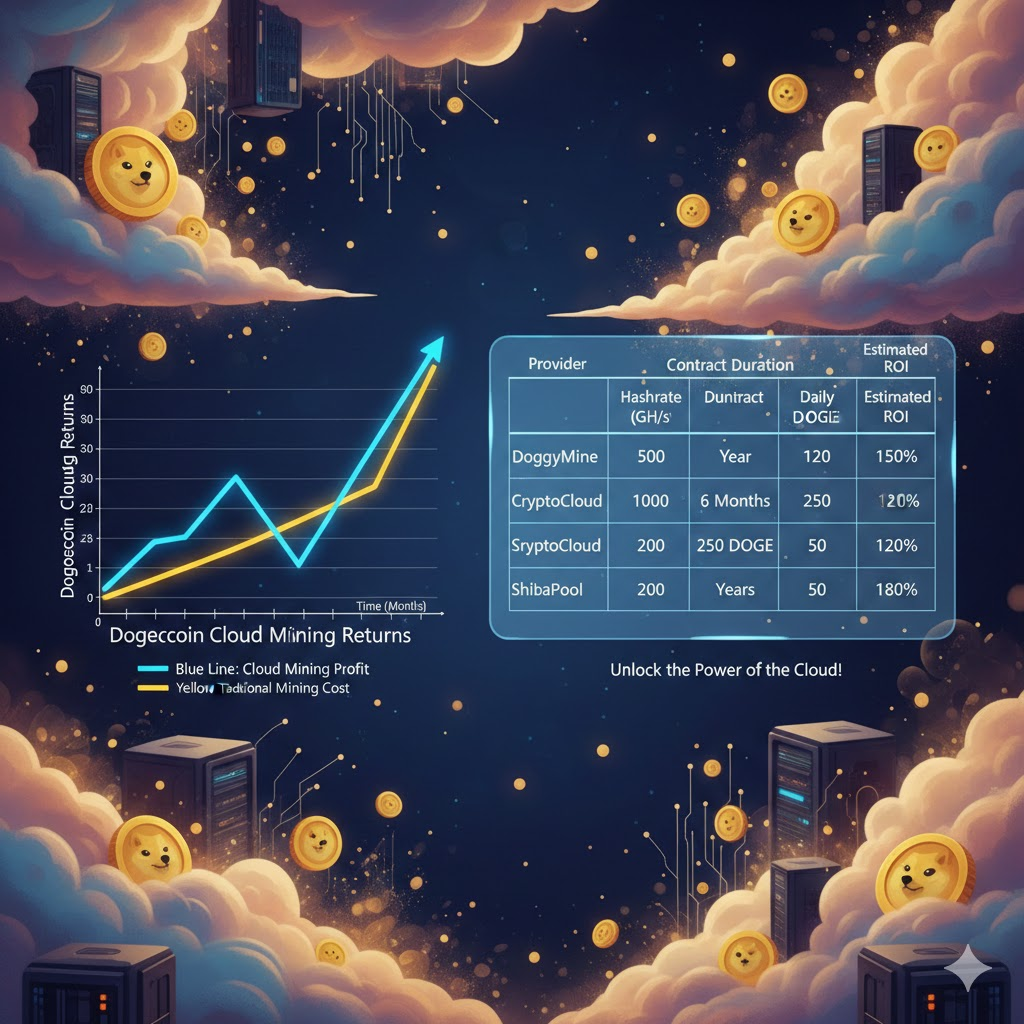
Contract price sets the bar. Pay $500 for 1 TH/s? Compare daily output. If it mines 50 DOGE a day at current rates, ROI hits 15% yearly. Adjust for drops. Reputable calculators from sites like WhatToMine help.
Analyzing Maintenance Fees: The Hidden Cost of Cloud Mining
Fees keep the lights on at farms. They include power, cooling, and repairs. For Dogecoin cloud mining, expect 0.0005 DOGE per KH/s daily.
Some providers fix fees in dollars. Others tie them to coin value. Fixed ones shield from price falls. Variable fees rise if DOGE climbs.
Compare providers side by side. A low upfront cost with high fees loses money fast. Aim for under 25% of earnings. Track fees monthly. Adjustments signal issues.
Contract Duration vs. Price Per TH/s
Short contracts cost more per TH/s. A 90-day deal might run $100 per TH/s. Long ones drop to $50 for two years.
Short terms fit market tests. You exit if prices tank. Long terms save cash but risk obsolescence. Difficulty could double in a year. That halves your output.
Tip: Model scenarios. Use spreadsheets. Factor 20% difficulty growth. Pick based on your risk level. Balance cost and flexibility.
Top Dogecoin Cloud Mining Providers: Due Diligence Checklist
No single best provider lasts forever. Markets shift. Focus on checks to vet any service.
Look for proof of operations. Real farms share photos or visits. Uptime over 99% shows reliability.
User stories matter. Forums like Reddit discuss payouts. Avoid new sites without track records.
Verifying Operational Transparency and Uptime Guarantees
Dashboards track your mining live. See hashrate and earnings in real time. Good providers update every hour.
Farm locations build trust. Iceland or Texas spots use cheap green energy. SLAs promise 99.5% uptime. Downtime cuts rewards.
Ask for audits. Third-party checks confirm hardware claims. Skip vague promises.
Withdrawal Procedures and Payment Reliability
Easy pulls build faith. Set minimums low, like 100 DOGE. Process in 24 hours.
Reviews highlight delays. Some firms hold funds weeks. Direct to your wallet avoids exchanges.
Test small first. Mine a bit, withdraw. Smooth flow means go bigger.

Regulatory Compliance and Customer Support Infrastructure
Big contracts need KYC. ID checks fight money laundering. US or EU rules apply.
Support answers fast. Live chat beats email. Tech help fixes dashboard glitches.
Jurisdictions matter. Offshore spots risk shutdowns. Pick licensed firms.
Risks and Realities of Dogecoin Cloud Mining
Cloud mining isn’t free money. Volatility rules crypto. One bad month wipes gains.
Providers fail sometimes. Bankruptcy means lost contracts. No refunds often.
Expect ups and downs. Treat it as a side bet. Not your main income.
The Impact of Increasing Network Difficulty
Difficulty adjusts every block. More power joins, puzzles get hard. In 2025, it rose 50%.
Your contract stays fixed. Same hashrate yields 30% less DOGE. Watch charts on Dogecoin explorers.
Halving events don’t hit DOGE yet. But growth does. Plan for 10-20% yearly hikes.
Vendor Lock-in and Early Termination Penalties
Contracts bind you. Early exit costs 50% of value. Some ban refunds total.
Bankrupt firms leave you dry. No assets to claim. Spread risks across providers.
Read terms close. Look for force majeure clauses. They cover disasters.
Market Volatility: Dogecoin Price Swings
DOGE jumped 10x in 2021. It crashed hard too. A drop from $0.30 to $0.10 kills ROI.
Fees stay steady. If paid in fiat, they eat more when prices fall.
Hedge with stablecoins. Or mine during bulls. Time your entry.
Conclusion: Is Dogecoin Cloud Mining Worth the Investment?
Dogecoin cloud mining offers passive DOGE without hardware headaches. But high costs and provider risks loom large. Difficulty rises and prices swing wild.
Weigh your goals. If you want easy crypto exposure, it fits. Do deep checks on contracts. Model finances for worst cases.
Start small. Use trusted tools. With care, cloud mining boosts your portfolio in 2026. Research now. Mine smart.
Maximizing Your Dogecoin Cloud Mining Strategy
Timing the Initial Investment
Buy in when Dogecoin dips low. Say under $0.10 in a bear market. Low difficulty helps too.
Watch halving events, though Dogecoin skips them. February 2026 looks steady post-2025 rally. Jump on sales from providers.
Dollar-cost average buys. Spread payments over weeks. This smooths risks.
Reinvestment vs. Immediate Payouts
Reinvest DOGE to buy more power. It grows like compound interest. A 10% daily reinvest doubles output fast.
Cash out for steady income. Sell at peaks to lock gains. Balance based on your needs.
Track with spreadsheets. See which path fits your budget. Most pros mix both.
Understanding Tax Implications
Mining rewards count as income. In the US, report daily value. Capital gains hit when you sell.
Keep records of all payouts. Use software like CoinTracker. Rates vary by country, so check local rules.
Talk to a tax pro. They spot deductions on fees. Stay legal to avoid fines.
Conclusion: Is Dogecoin Cloud Mining Worth the Investment Today?
Dogecoin cloud mining offers ease over owning rigs. But profits face fees, difficulty, and market swings. It trades hardware hassles for contract traps.
Weigh your goals. If you want hands-off crypto, test small. Research beats regret every time.
Dive deep before you invest. Check providers now. Start smart and watch your DOGE grow.
Pingback: Understanding Dogecoin Cloud Mining: A Comprehensive Guide for Beginners